Peace Boat Residency
平和の船 · 対話への架け橋 — A ten-day artistic residency designed to demonstrate that music, embodied practice, and intercultural dialogue can function as instruments of peacebuilding — at scale, across languages, aboard a floating community of 1,800 people from 30+ nationalities.
Completed · April 7–17, 2026
Ten Days, Open Sea
“Music became a profound bridge for peace. When songs become encounters, they act as powerful catalysts for empathy and intercultural understanding. Participants left with hearts full of gratitude.”
— Peace Boat · Official Program Statement · Voyage 123
Otra Orilla, el Mismo Mar
Patricia wrote about the moment of departure from Osanbashi Pier:
“Yorelé, yorelá, bonito viento pa' navegá'. Hoy zarpamos desde Yokohama con buen viento, artistas y educadoras a bordo del Peace Boat, el Barco de la Paz, en su 123er viaje global. Desde la orilla, el いってらっしゃい — 've y vuelve'; desde el barco, el 行ってきます — 'voy y vuelvo'. Eran dos voces a coro y una promesa de encuentro.”
“La paz como acto cotidiano de mirarnos, de aprender unos de otros, de elegir no olvidar que esa mirada nos exige presencia. Panamá presente: el embajador, el capitán, y las canciones que llevaremos y las que nacerán del encuentro.”
— Patricia Vlieg · April 7, 2026 · Yokohama
Day by Day, Port by Port
April 7 · Yokohama
Welcome by Yoshioka Tatsuya & departure ceremony
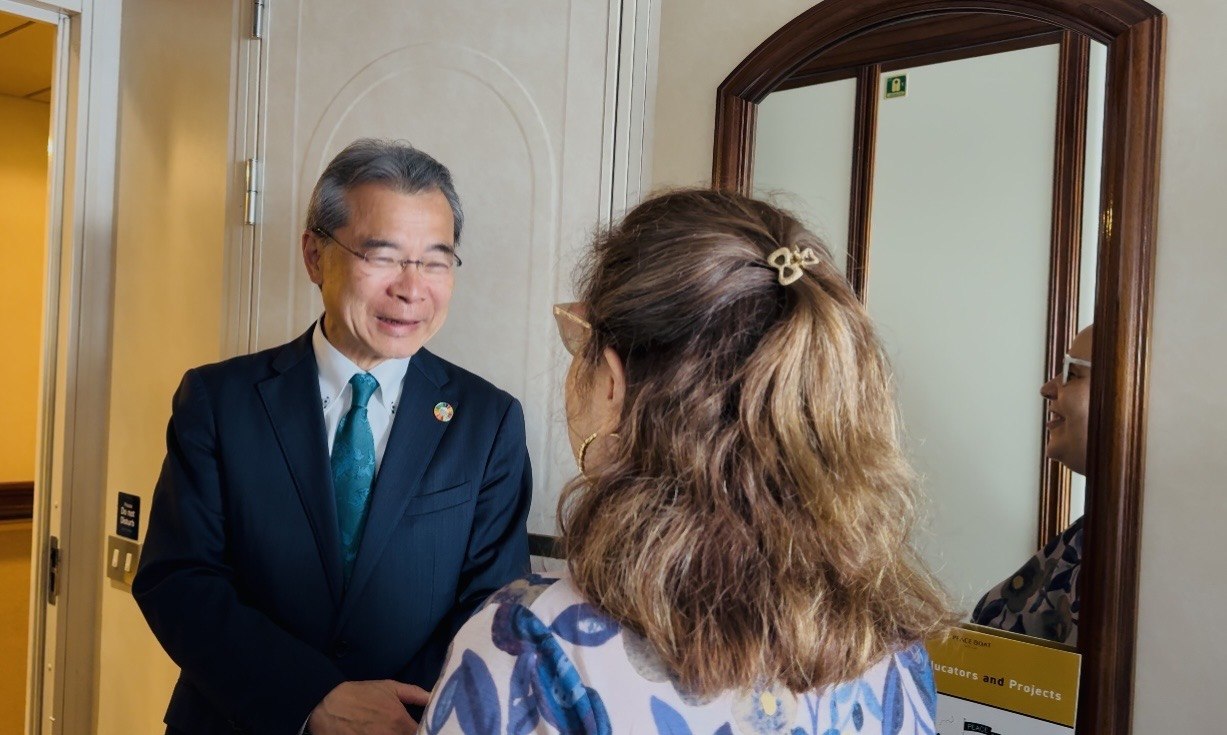
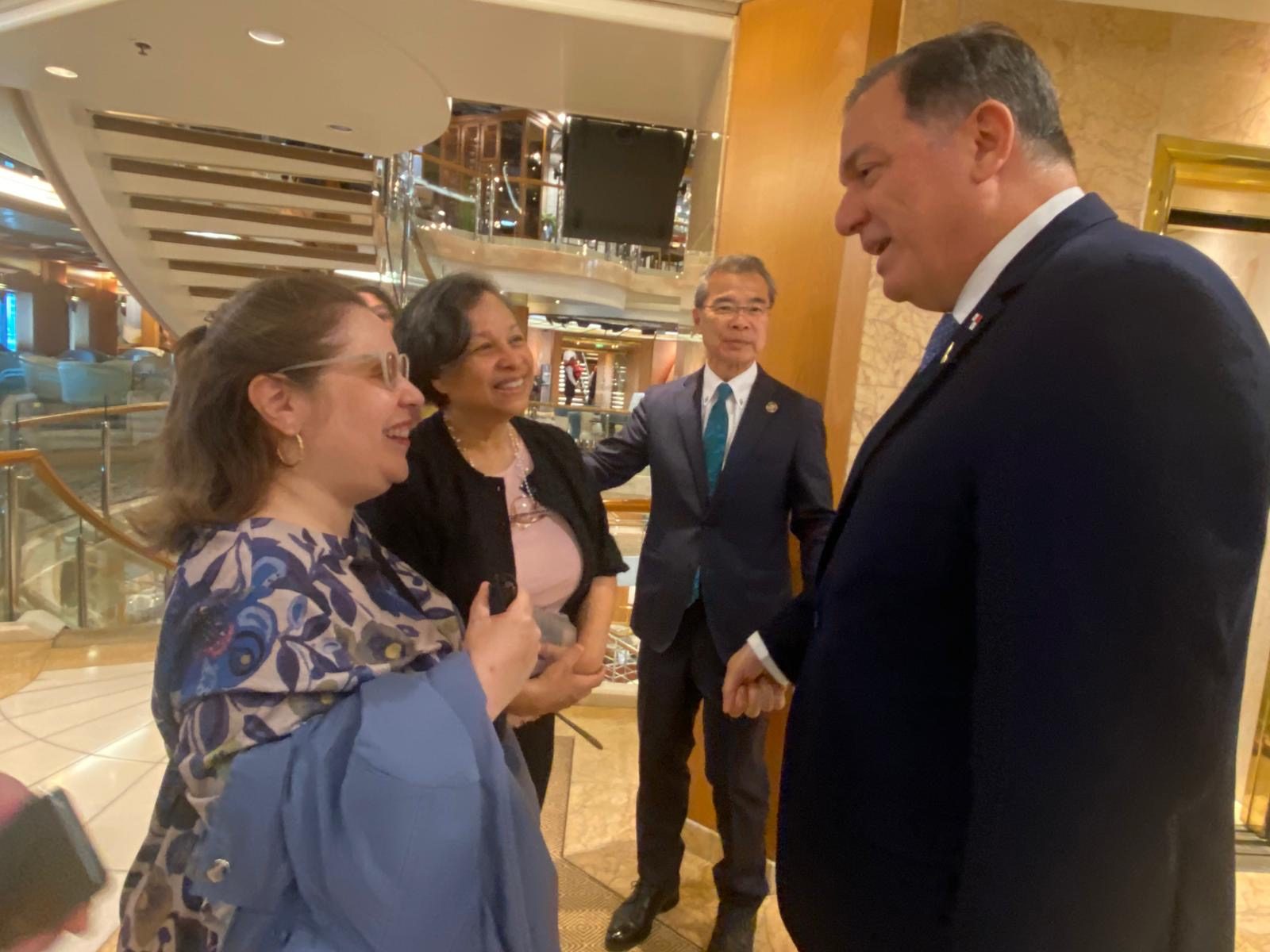
Departure marked the beginning of a process first envisioned in 2019 and realized in 2026. Peace Boat Founder and Director Yoshioka Tatsuya received Patricia and Vilma personally. At Osanbashi Pier, H.E. Walter Cohen, Ambassador of Panama to Japan and Consul General in Tokyo, was present as artists, educators, and passengers initiated a shared experience that would develop over ten days.
April 8–9 · Kobe
Welcome Show & flamenco collaboration
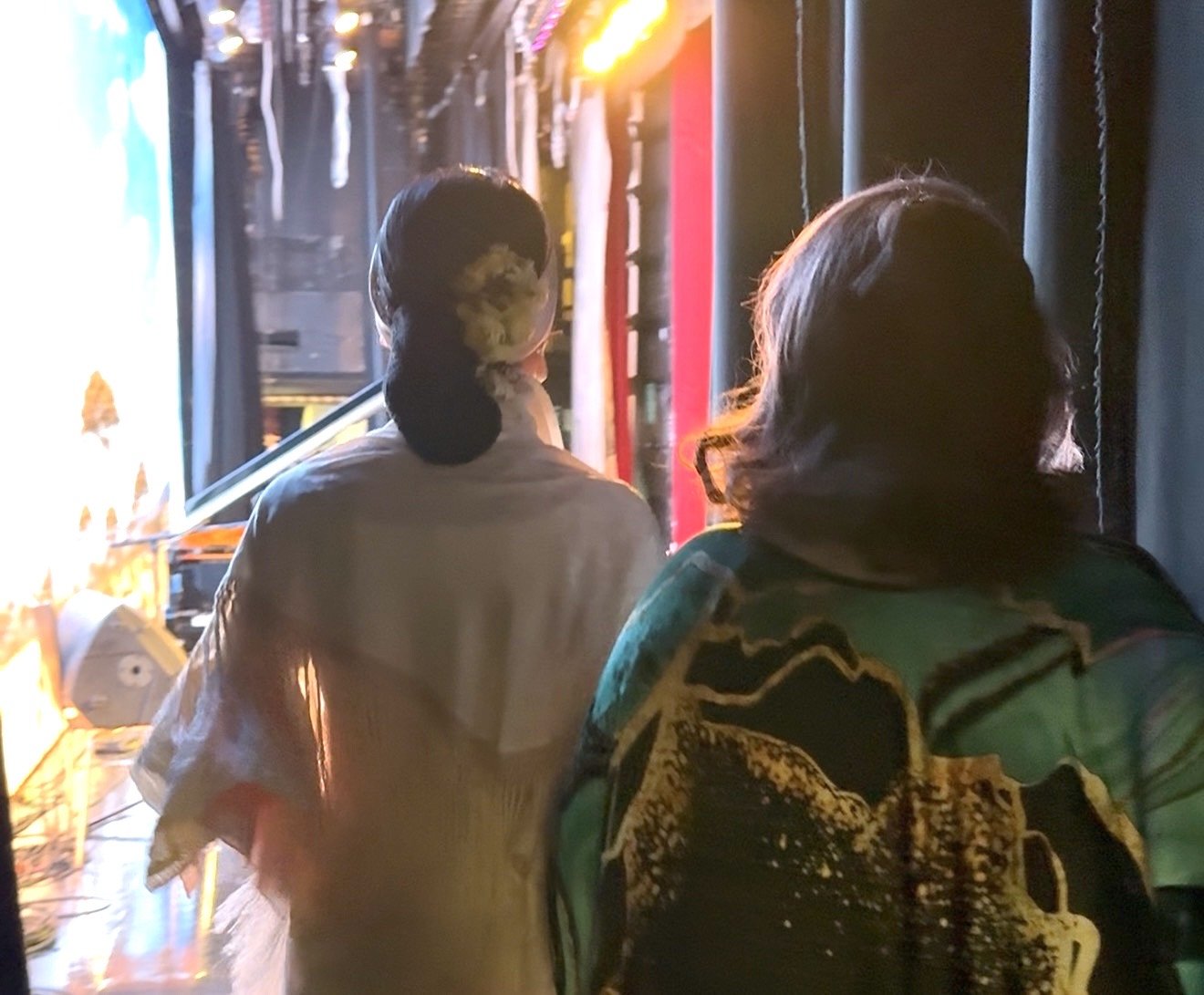
Participation in the Welcome Show introduced the first artistic collaboration. Flamenco artists and invited performers shared the stage, establishing a dynamic of exchange across traditions.
April 11 · Open ocean
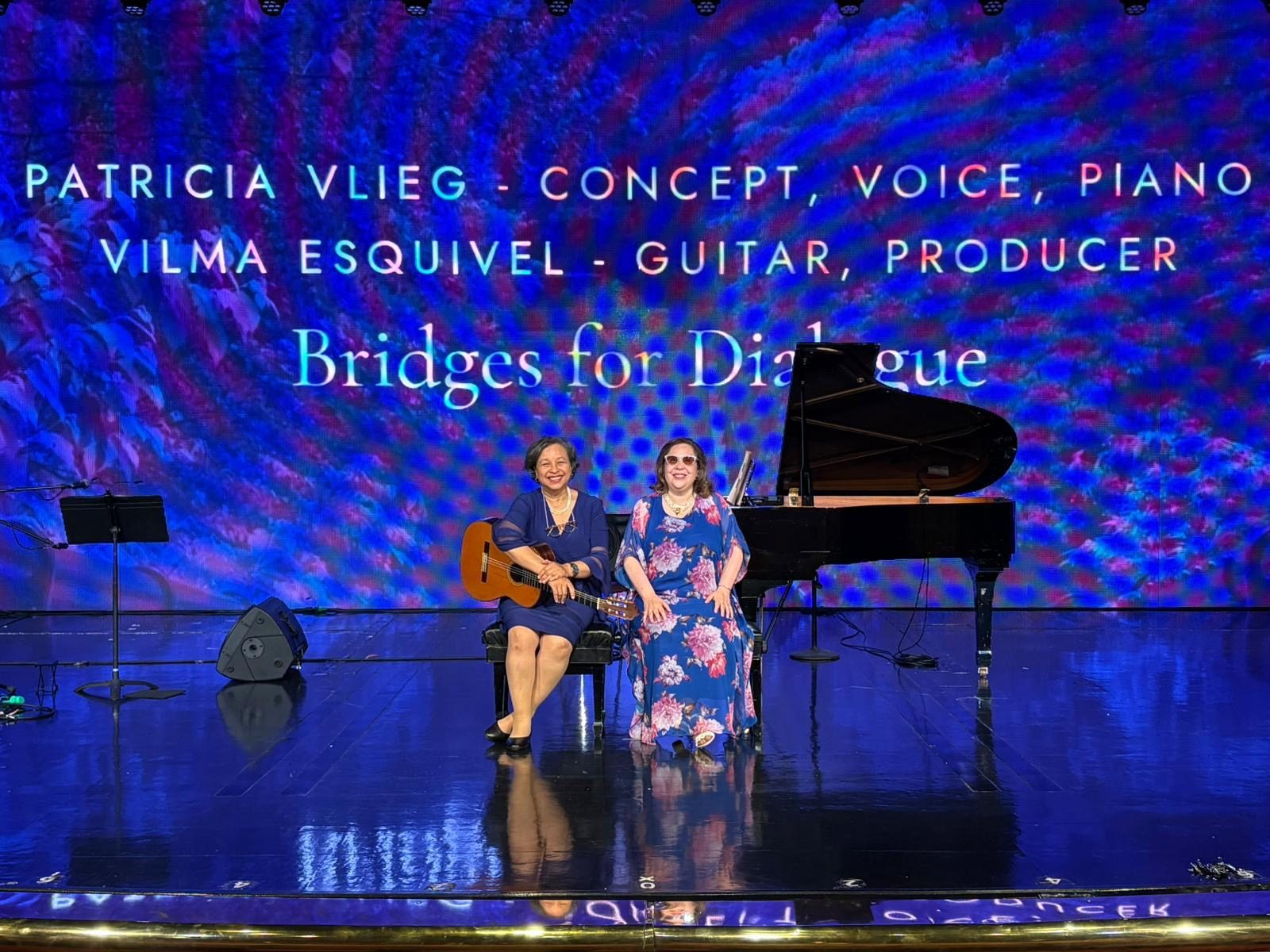
Concert ① — Bridges for Dialogue · 対話への架け橋
Two sessions in the main theater, structured in four movements: Encounter, Discovery, Collaboration, and Gratitude. The repertoire moved across musical traditions — sung in English, Japanese, Portuguese, French, Chinese, and Spanish — supported by multilingual interpretation. The concert was also broadcast onboard, extending its reach.
April 12 · Hong Kong
Port day & interview
Port day included an interview with maritime journalist Kanamaru Tomoyoshi (金丸知好), offering a moment to articulate the conceptual framework of the residency.
April 13 · At sea
Peace Center & dinner with Captain Bolívar Donado
A guided visit to the ship's permanent Nobel Peace Center — “A Message to Humanity,” an outreach exhibition by Nihon Hidankyo, 2024 Nobel Peace Prize laureate. That evening: dinner with Captain Bolívar Donado — a Panamanian captain at the helm of a Japanese peace ship. Three Panamanians at the same table, mid-ocean between Hong Kong and Singapore.
April 14 · At sea
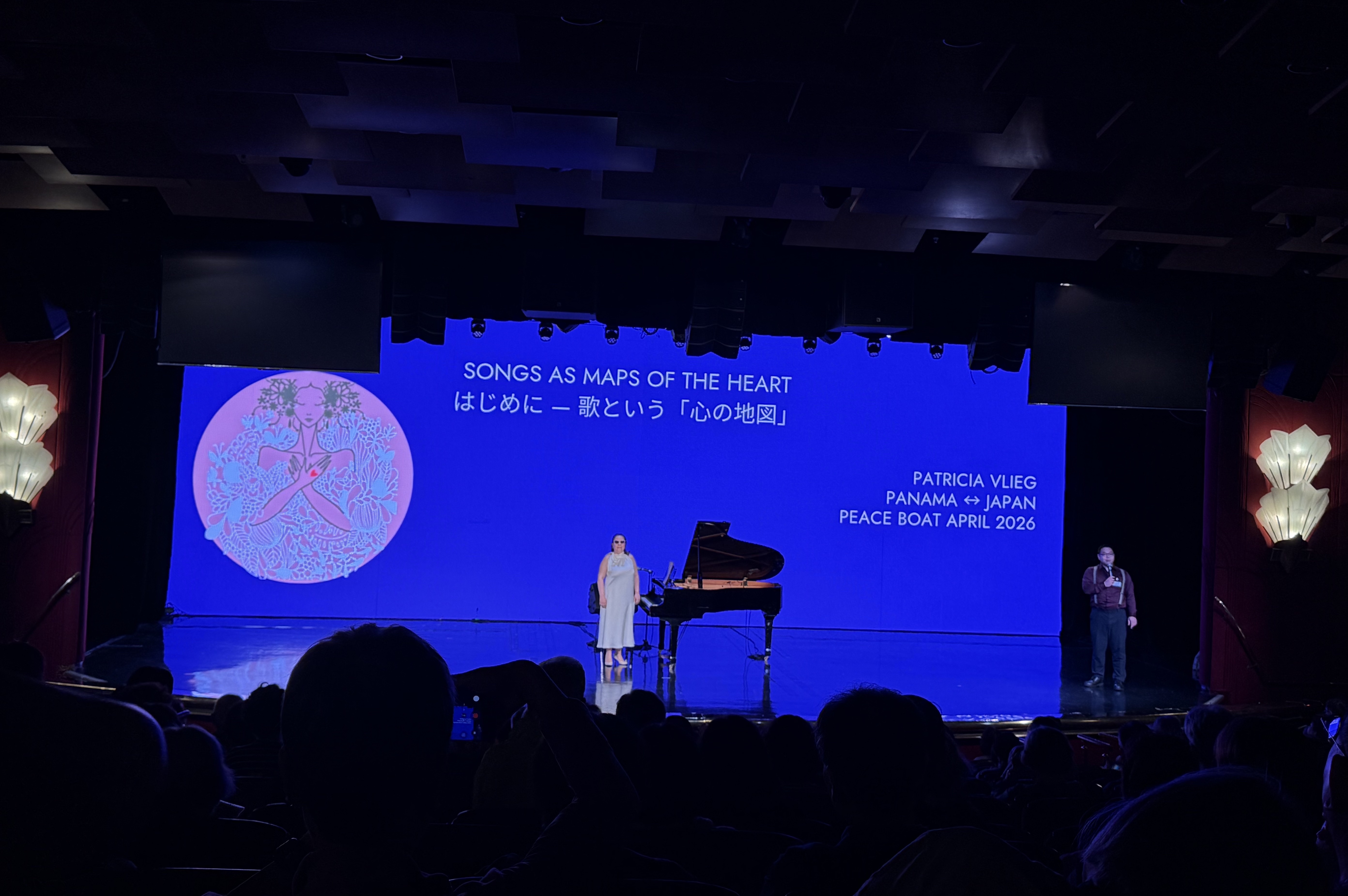
Lecture-performance & embodied workshop
A 75-minute lecture-performance explored songs as carriers of memory, identity, and cultural meaning. That same afternoon, a 75-minute embodied session based on the ARTI framework engaged participants through movement, rhythm, and listening — culminating in the collective creation of a shared rhythmic structure experienced as a human orchestra.
April 15–16 · At sea
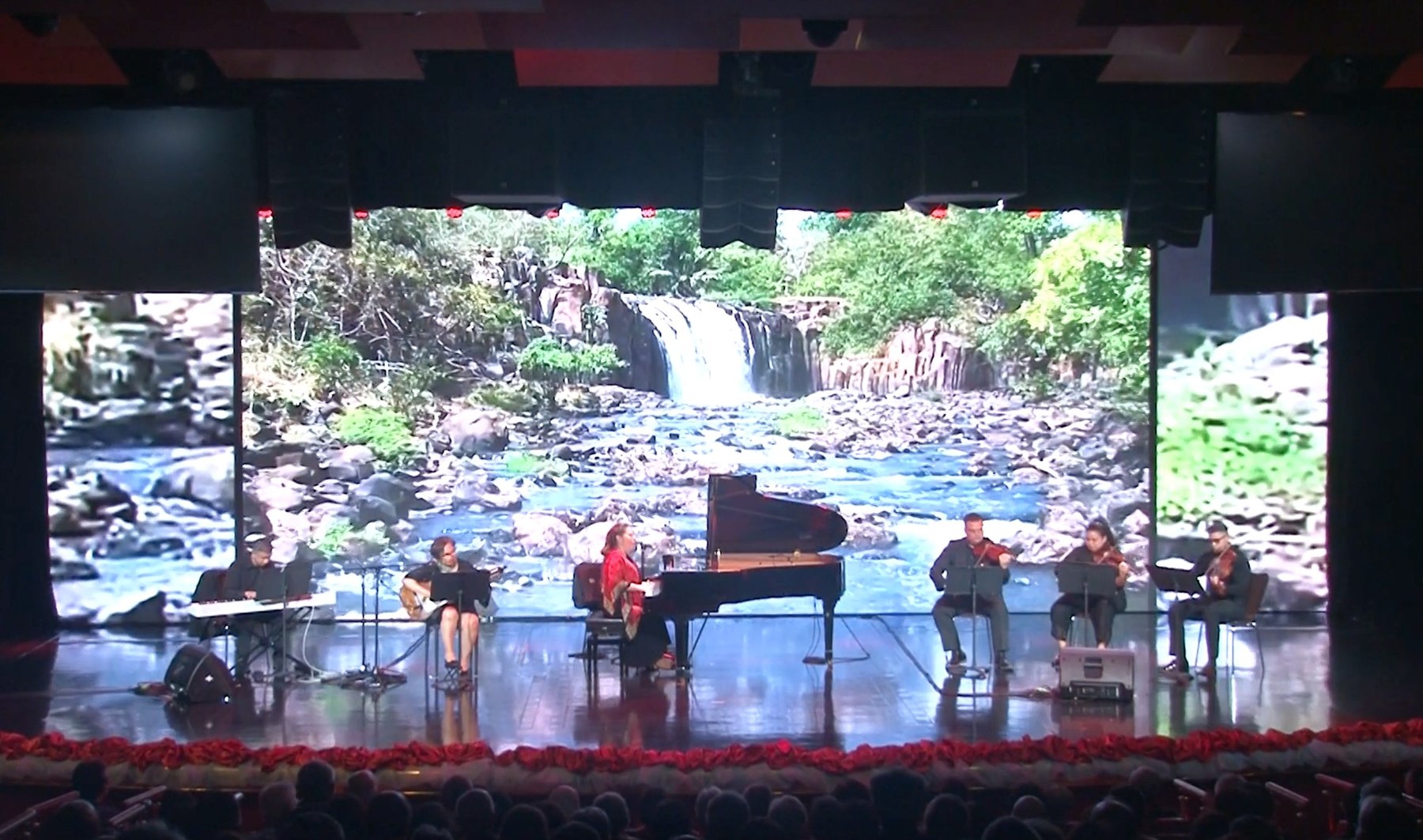
Concert ② — Panamá en el Corazón
Two sessions developed around themes of cultural identity and memory, performed in collaboration with a Venezuelan string quartet onboard — integrating different musical traditions into a shared performance. A Q&A session at the Legends Bar extended the experience into direct dialogue with participants.
April 17 · Singapore
Disembarkation · End of residency
Arrival and disembarkation marked the conclusion of the residency. The process generated connections, shared references, and a collective experience carried beyond the duration of the voyage.
What Passengers Carried Home
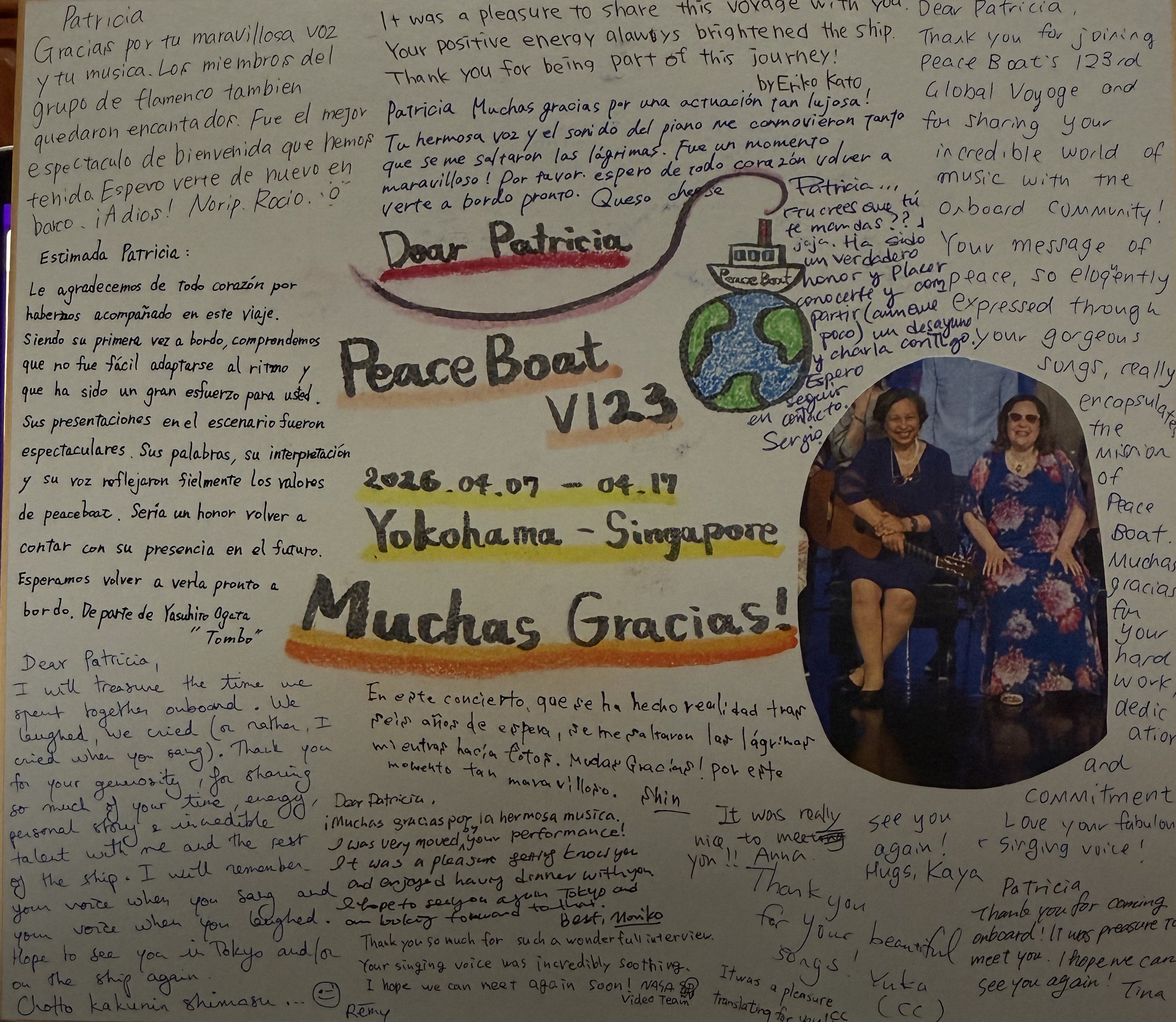
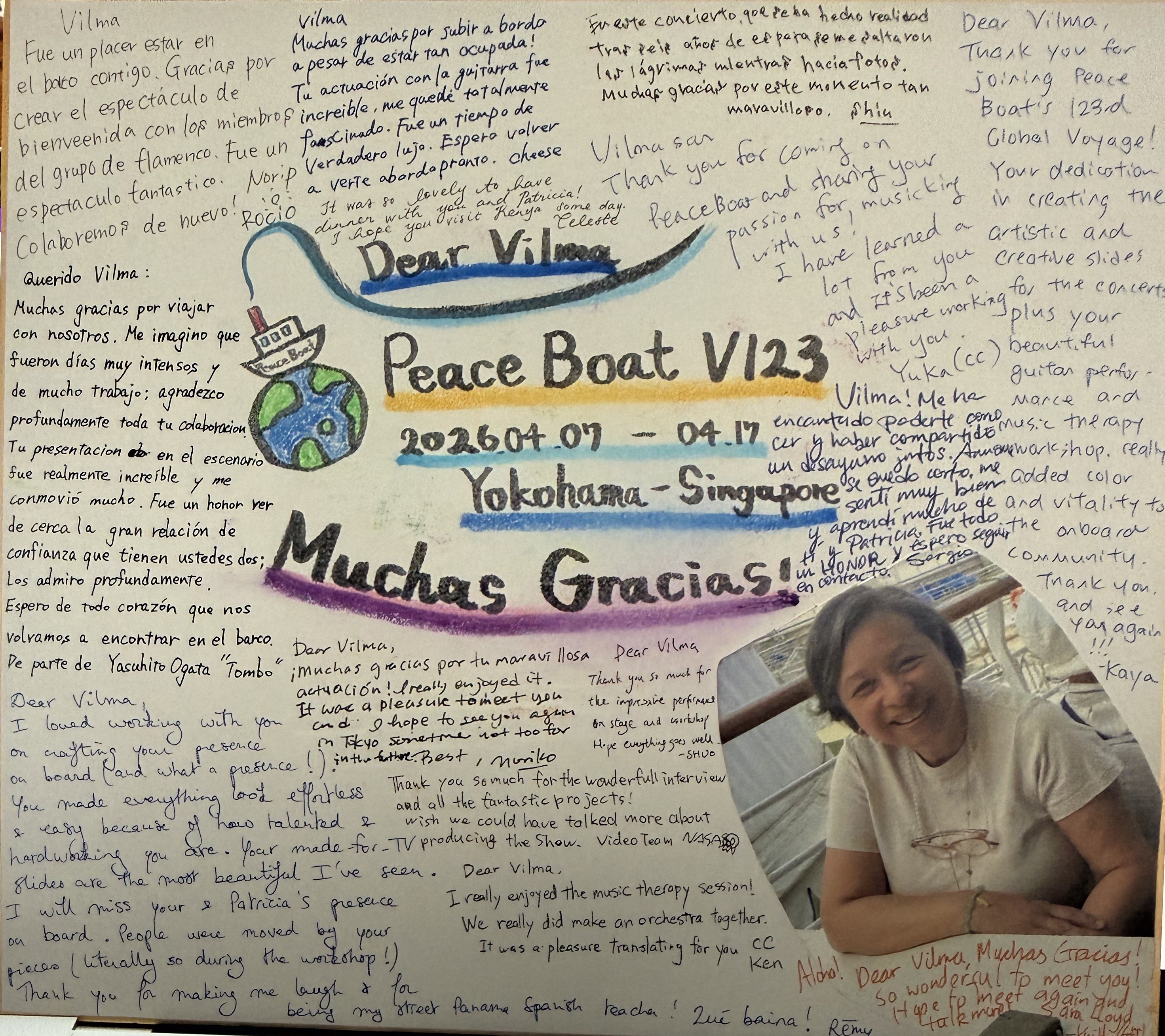
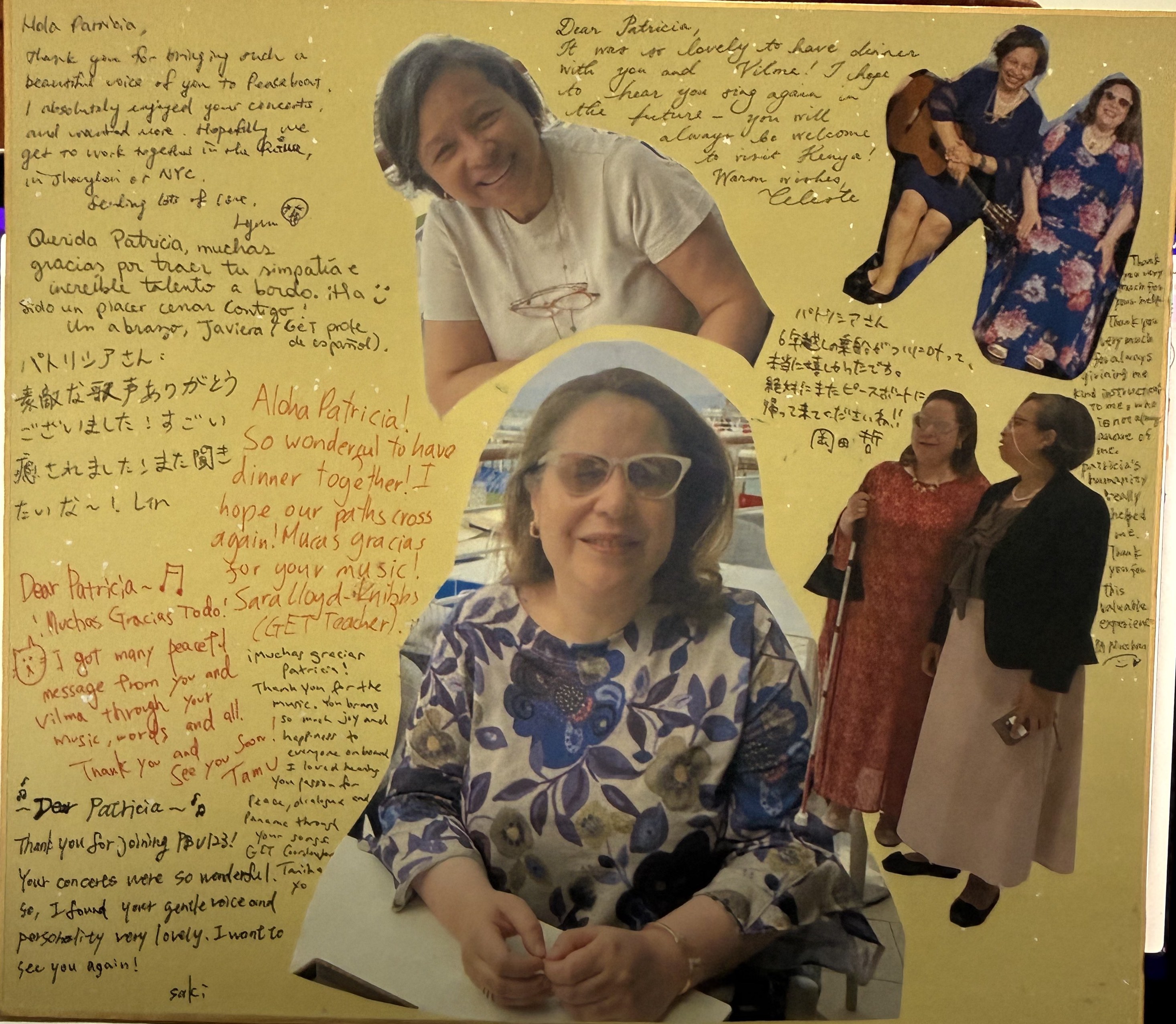
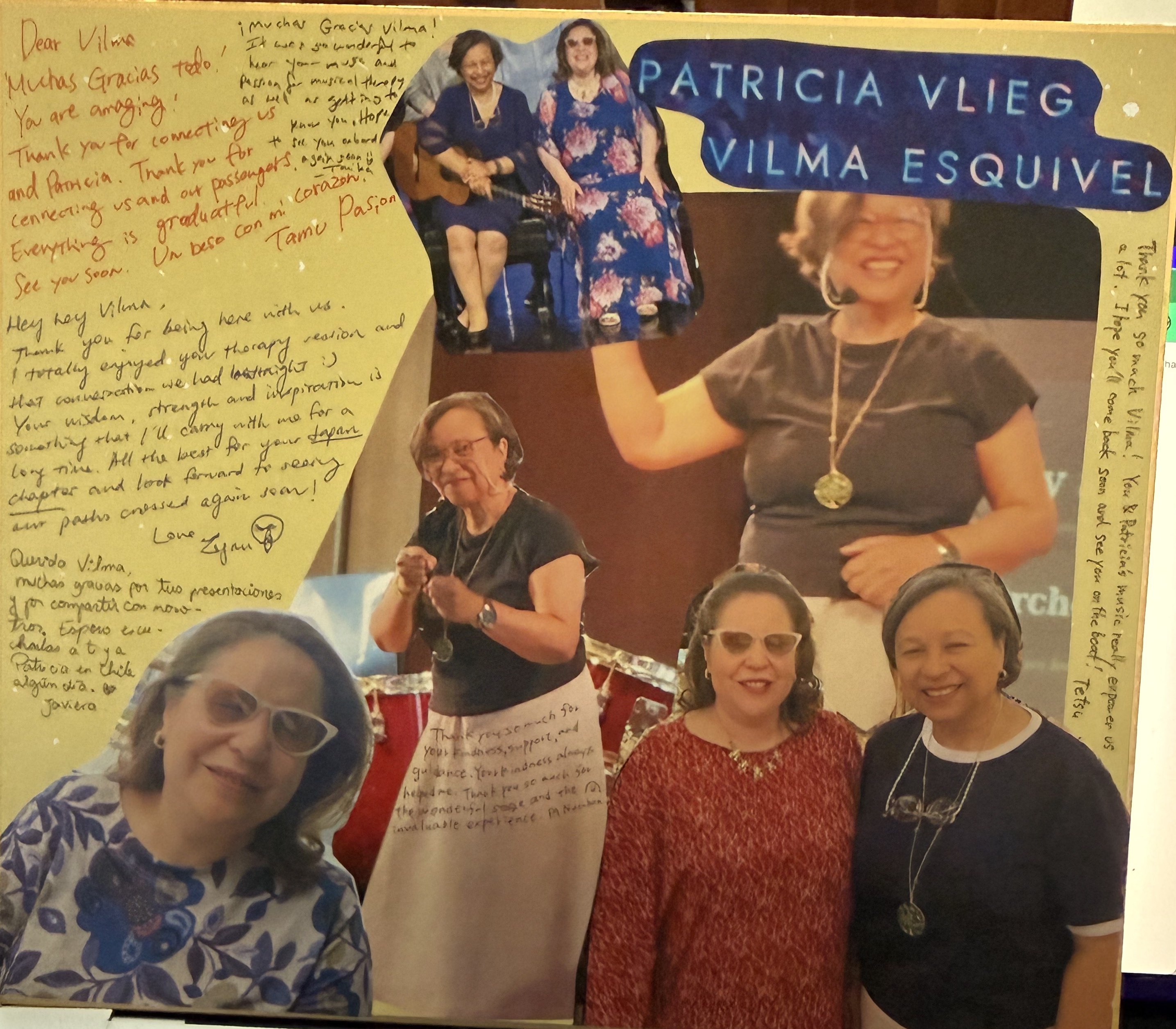
At the end of Voyage 123, passengers and crew filled two boards with handwritten notes — in Spanish, English, Japanese, and more. These are their words.
For Patricia
“Your message of peace, so eloquently expressed through your gorgeous songs, really encapsulates the mission of Peace Boat.” — Kaya
“We laughed, we cried — or rather, I cried when you sang. Thank you for sharing so much of your time, energy, personal story and incredible talent with me and the rest of the ship.” — Passenger, Peace Boat V123
“En este concierto que se ha hecho realidad tras años de espera, me saltaron las lágrimas. Muchas gracias por este momento tan maravilloso.” — Shin
素敵な歌声ありがとうございました!すごい癒されました!また聴きたいな~! "What a beautiful voice — it was so healing. I want to hear you again!" — Lin
“Your singing voice was incredibly soothing. I hope we can meet again soon!” — Remy, Video Team, Peace Boat
For Vilma
“Your dedication in creating the artistic and creative slides, plus your beautiful guitar performance and music therapy workshop, really added color and vitality to the onboard community.” — Kaya
“I really enjoyed the music therapy session. We really did make an orchestra together.” — Ken, translator
“Tu presentación en el escenario fue realmente increíble y me conmovió mucho. Fue un honor ver de cerca la gran relación de confianza que tienen ustedes dos.” — Yasuhiro Ogata “Tombo”
“You made everything look effortless because of how talented and hardworking you are. I will miss your and Patricia’s presence on board.” — Passenger, Peace Boat V123
“Thank you for being here with us. Your wisdom, strength and inspiration is something that I’ll carry with me for a long time.” — Zyan
From the open sea to Imabari.
The Peace Boat residency is now part of the platform's documented trajectory — and the bridge to Sea Bridges 2027. Institutions interested in the documentation, research outcomes, or the next residency are welcome to begin the conversation.
Yokohama → Singapore · April 2026