Case Study
Peace Boat Voyage 123
How music, dialogue and shared practice created conditions for trust across cultures.
The Relationship
This residency is, at its core, about a relationship with peace itself — one that extends beyond any single voyage.
Patricia's relationship with Japan began in fourth grade in Panama, through friendship with a Japanese family whose father was posted there as a technical advisor. Weekly phone calls with three sisters became her first lived entry into the language and culture.
Vilma's relationship with Japan began through Patricia's. She first traveled there in 2011 as Patricia's manager, returned in 2019, and visited Soka University through an invitation from the Panamanian Embassy with support from Min-On Concert Association. The university's philosophy of intercultural understanding through music moved her enough to apply.
Patricia and Vilma applied together that year. A planned 2020 start was delayed by the pandemic; both enrolled in 2024 and graduated in March 2026. The Peace Boat residency waited seven years before it could happen.
Once aboard, the relationship extended outward: to Peace Boat and its founder, Yoshioka Tatsuya; to the community of passengers; and to the hibakusha survivors of Hiroshima and Nagasaki, whose memory the ship carries to the world.
The Context
Peace Boat's cruises have been operated since 1995 by Japan Grace Co., Ltd., with programs conducted by partner NGO Peace Boat. Yoshioka Tatsuya founded the organization in 1983, while a student at Waseda University, to foster grassroots dialogue between Japan and other Asian countries during a period of regional tension.
The voyage sailed aboard the Pacific World, completed in 1995 and refurbished in 2021.
The Opportunity
Peace Boat is a months-long voyage: a moving community of people from dozens of nations sharing meals, decks and theaters with no guarantee of a common language.
Patricia and Vilma were invited aboard as guest lecturers for ten days within that larger journey. The question underneath the residency: can music become part of the infrastructure for peace in a space like that — the thing that lets people actually meet, listen and respond?
Bridges' Contribution
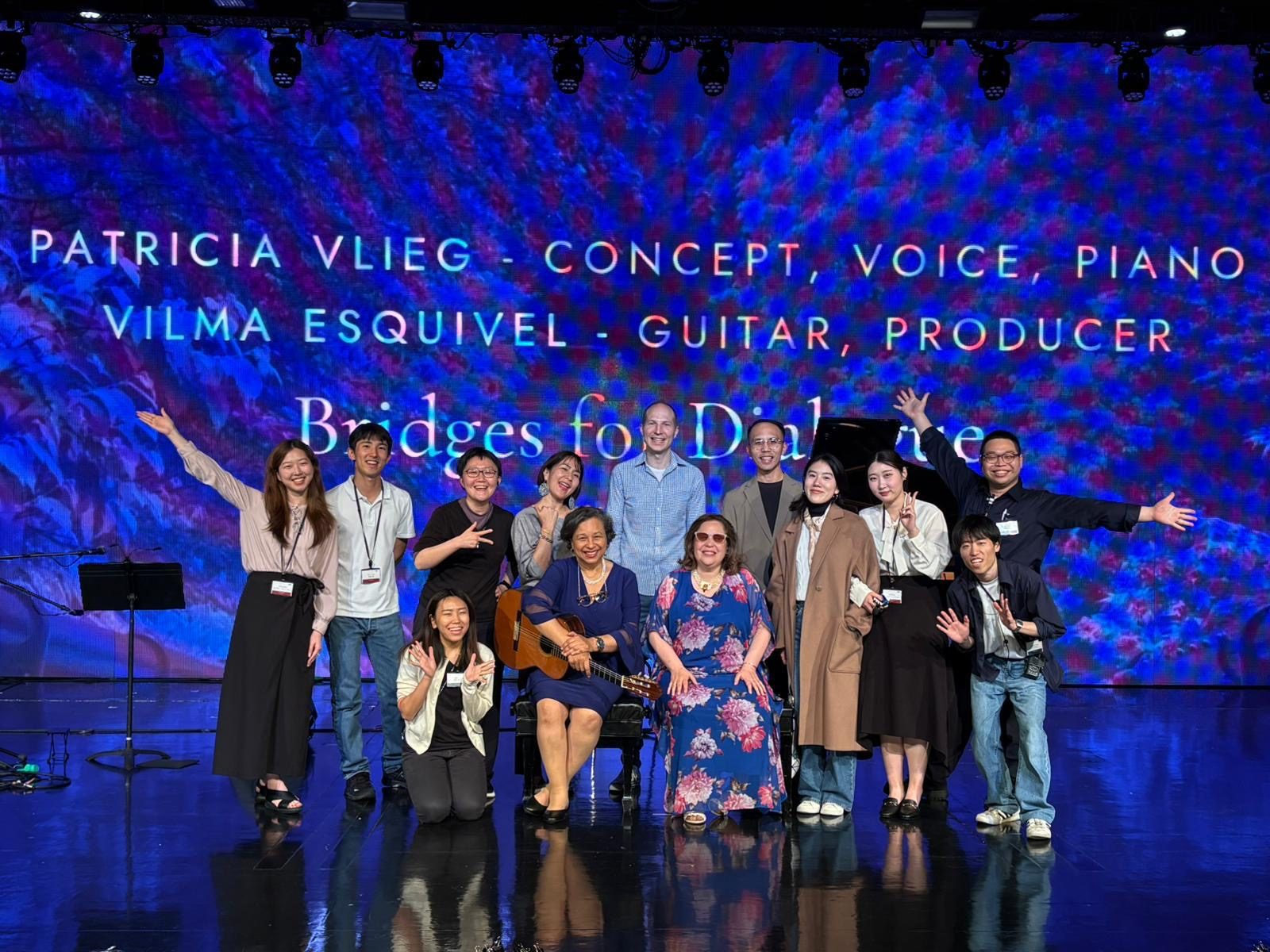
A ten-day residency treated the voyage itself as the venue for dialogue.
Bridges designed a sustained sequence of concerts, lectures, workshops and informal encounters, each building on what the last had already made possible.
Across the residency, music, embodied dialogue and intercultural facilitation became ways for passengers to listen, respond and build trust.
April 7 · Yokohama
Opening Statement
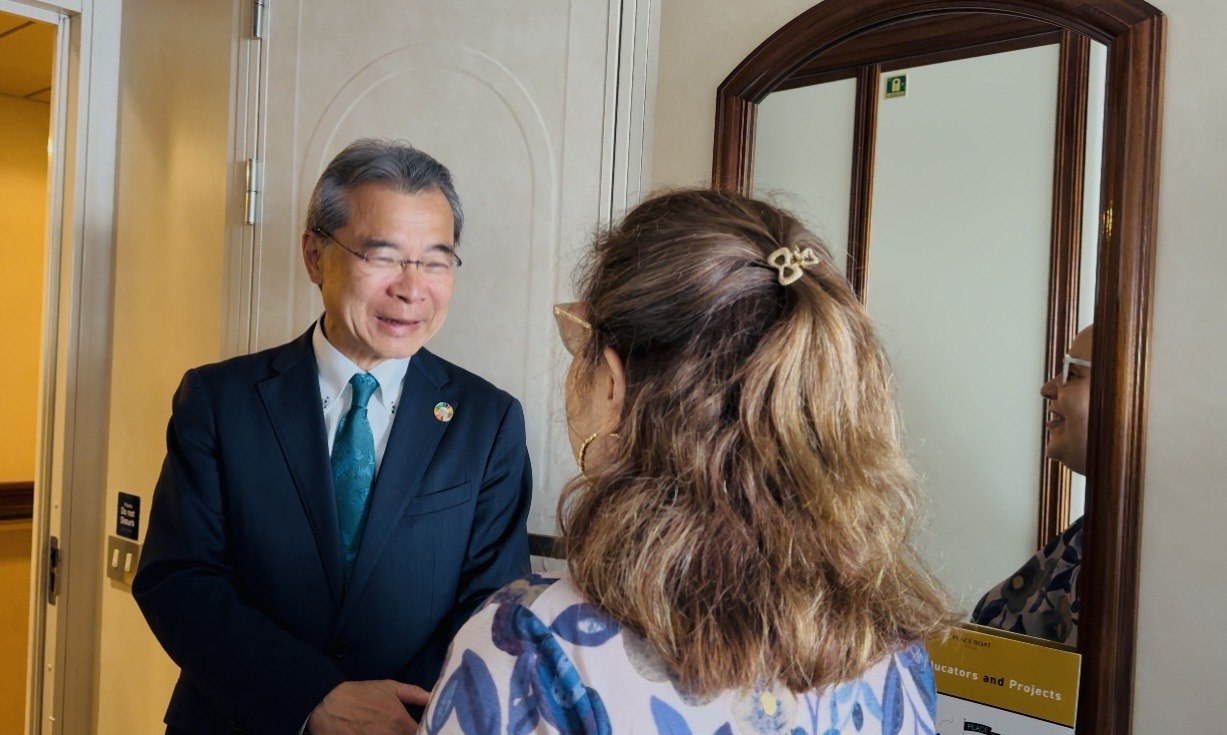
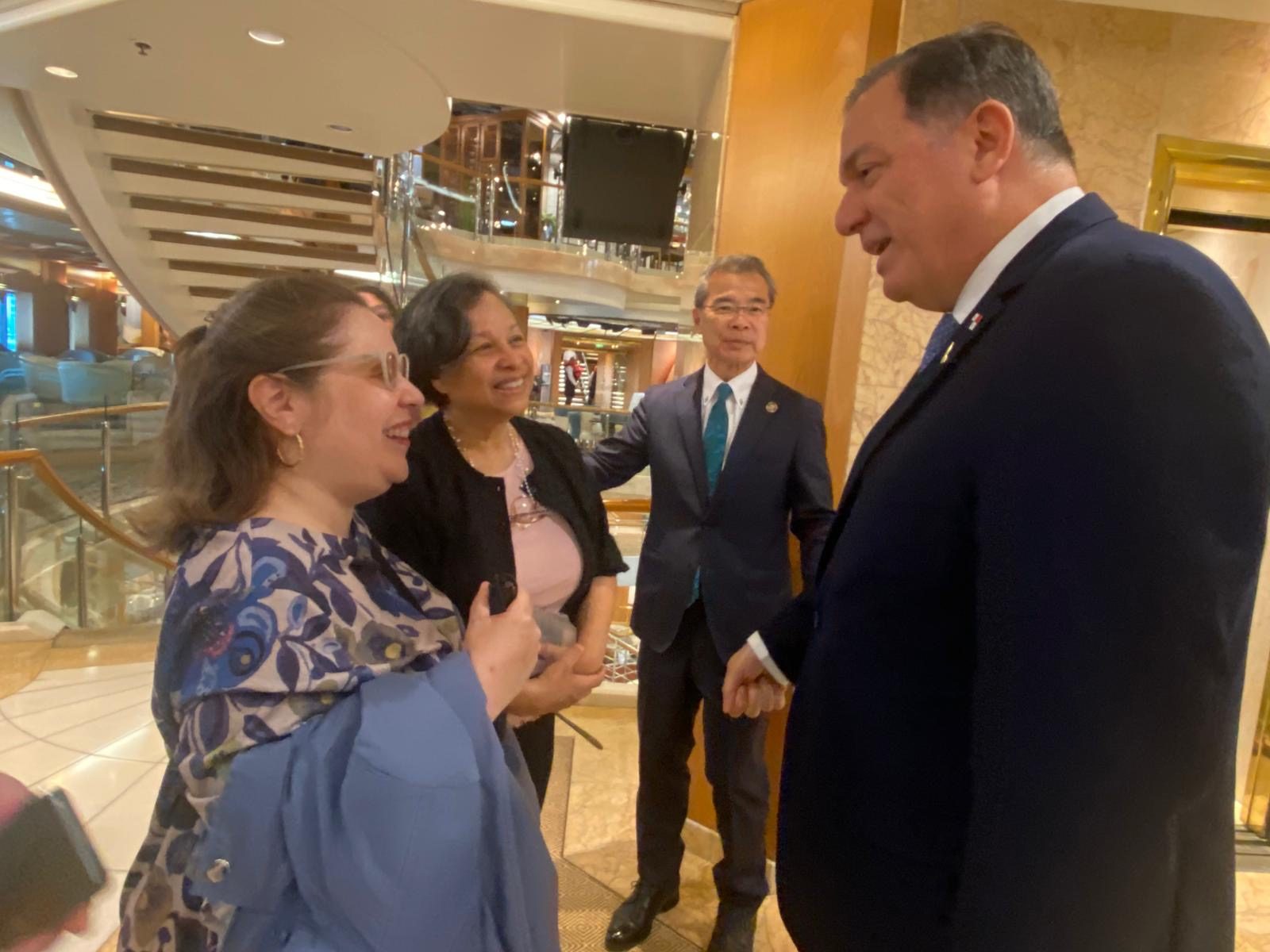
Departure from Osanbashi Pier, noon. Patricia wrote: “Yorelé, yorelá, bonito viento pa' navegá'... Eran dos voces a coro y una promesa de encuentro.” Yoshioka Tatsuya received Patricia and Vilma personally at departure. H.E. Walter Cohen, Panama's ambassador to Japan, was present.
April 8–9 · Kobe
Welcome Show
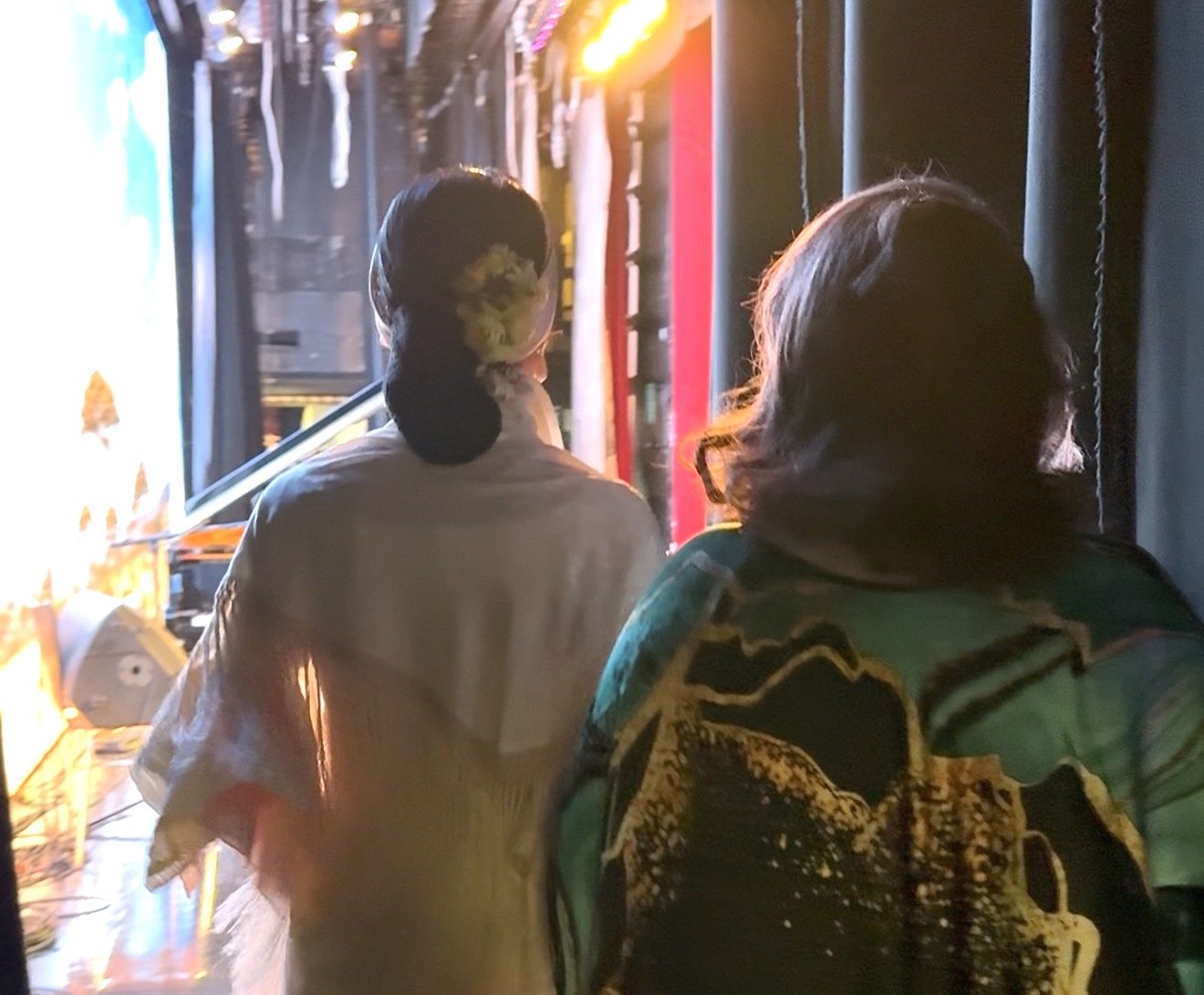
Participation in the ship's Welcome Show introduced the first artistic collaboration of the voyage: flamenco artists sharing the stage, an exchange across traditions before the residency's own programming had begun.
April 11 · Open Ocean
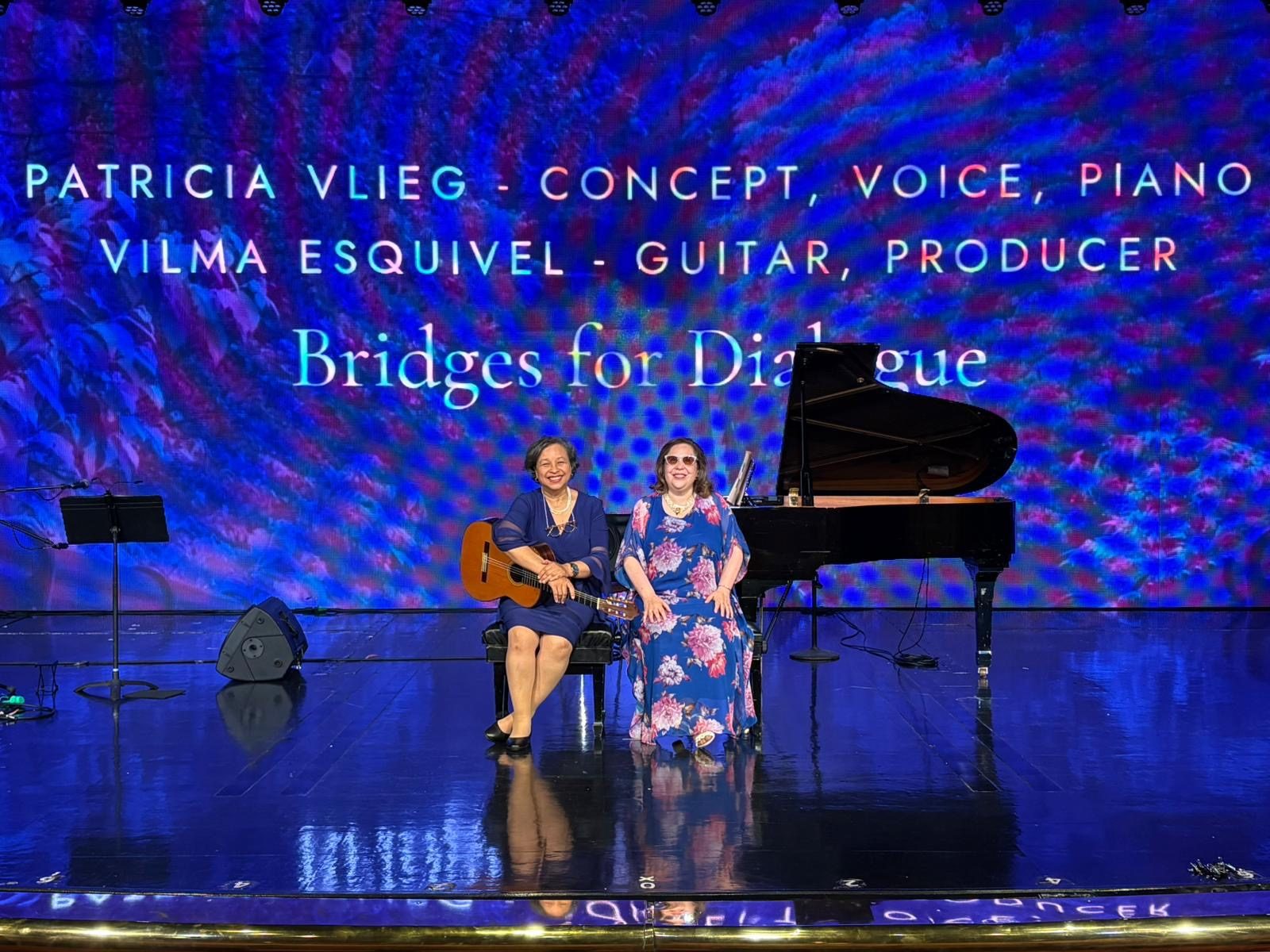
Concert ① — Bridges for Dialogue
Four movements — Encounter, Discovery, Collaboration and Gratitude — moved through six languages and five continents of music. The concert included a Japanese piece with a koto track from collaborator Miwa Inaba, a Chinese traditional song recorded with Brenda Lau, French songs, a Jamaican folk song and a closing medley including Inochi no Uta.
The performance was broadcast onboard with interpretation in Chinese, Korean and English.
April 12 · Hong Kong
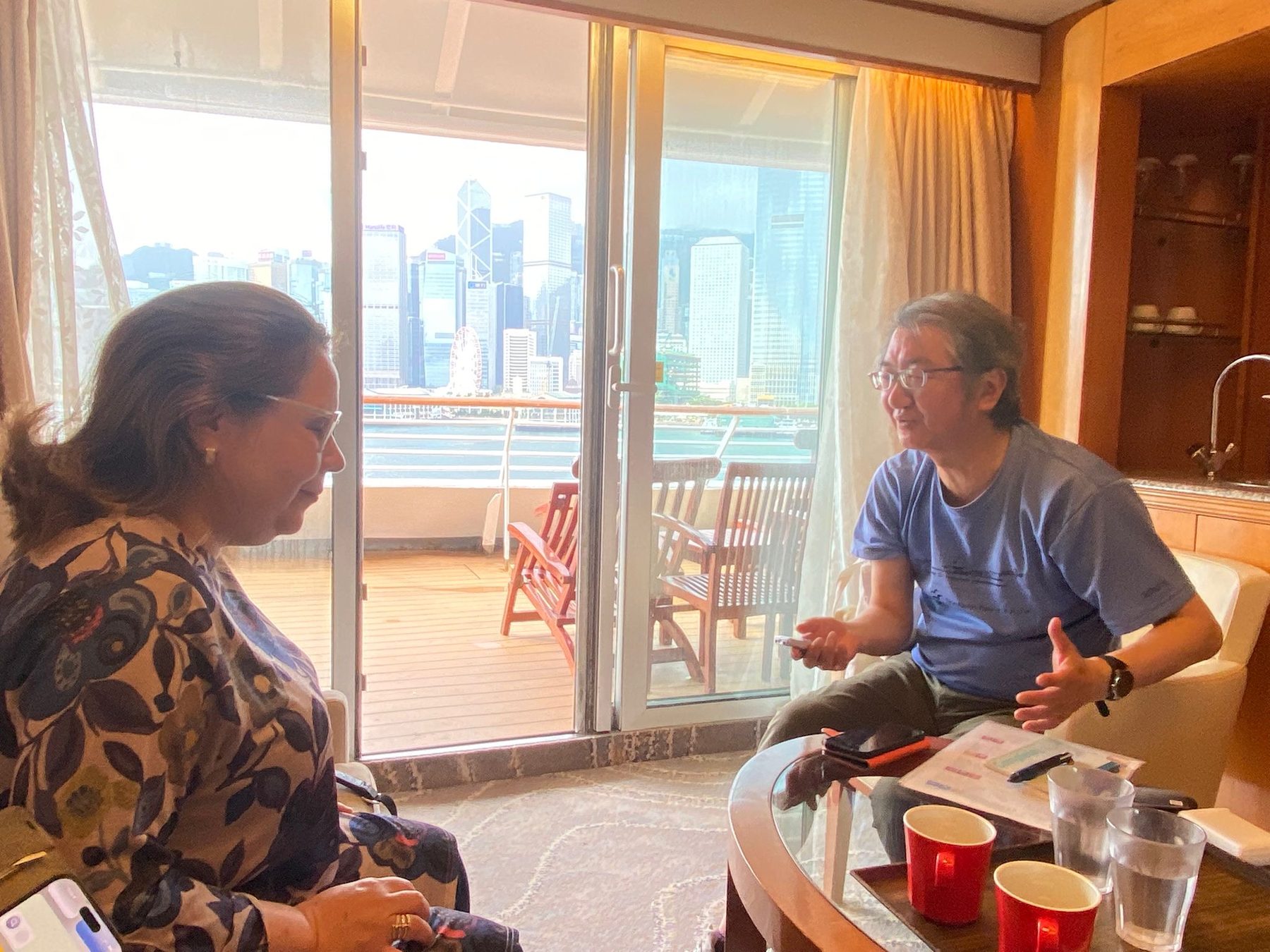
Interview
An interview with maritime journalist Kanamaru Tomoyoshi extended the conversation beyond the performance space.
April 13 · At Sea
A Message to Humanity
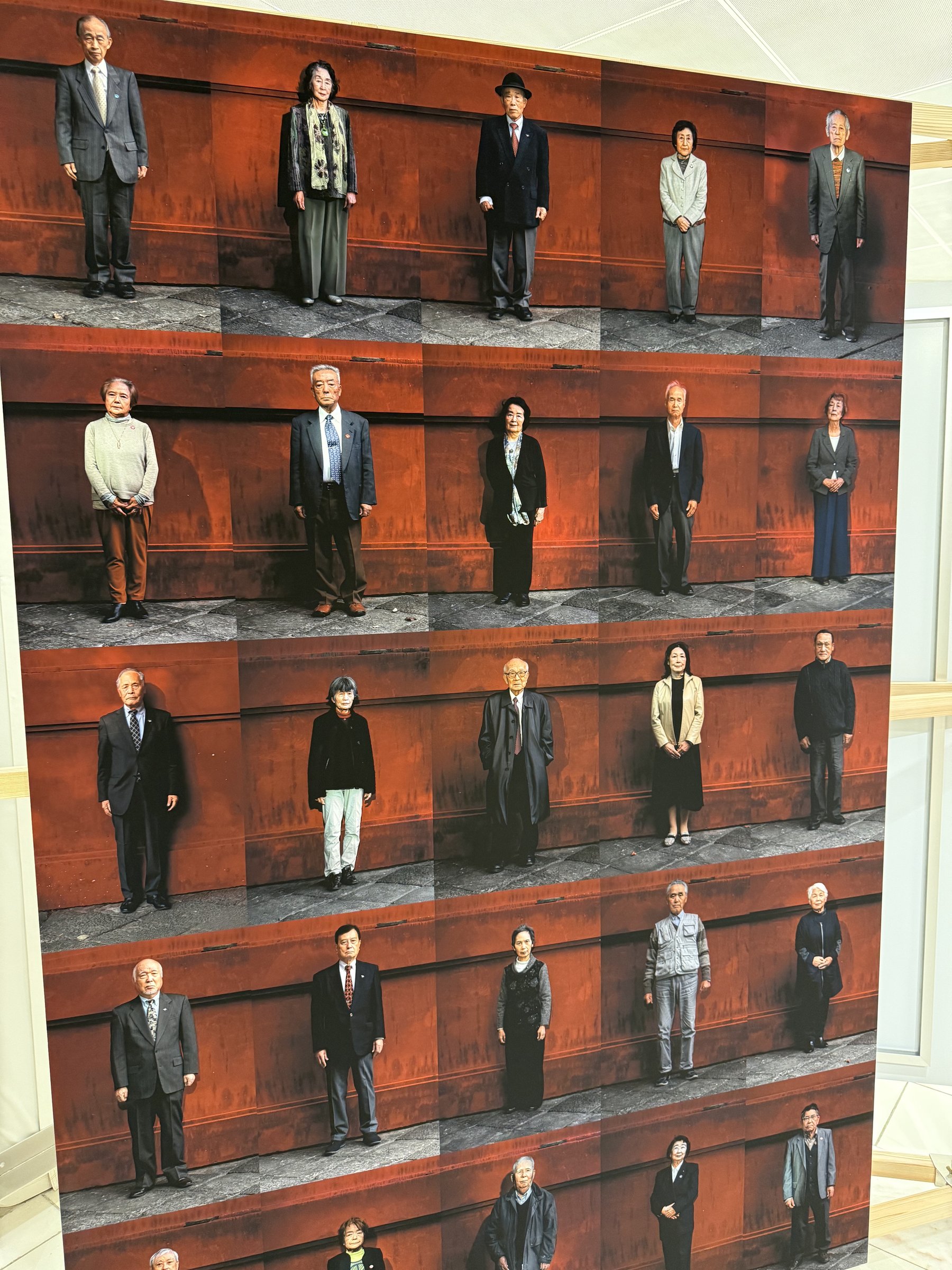
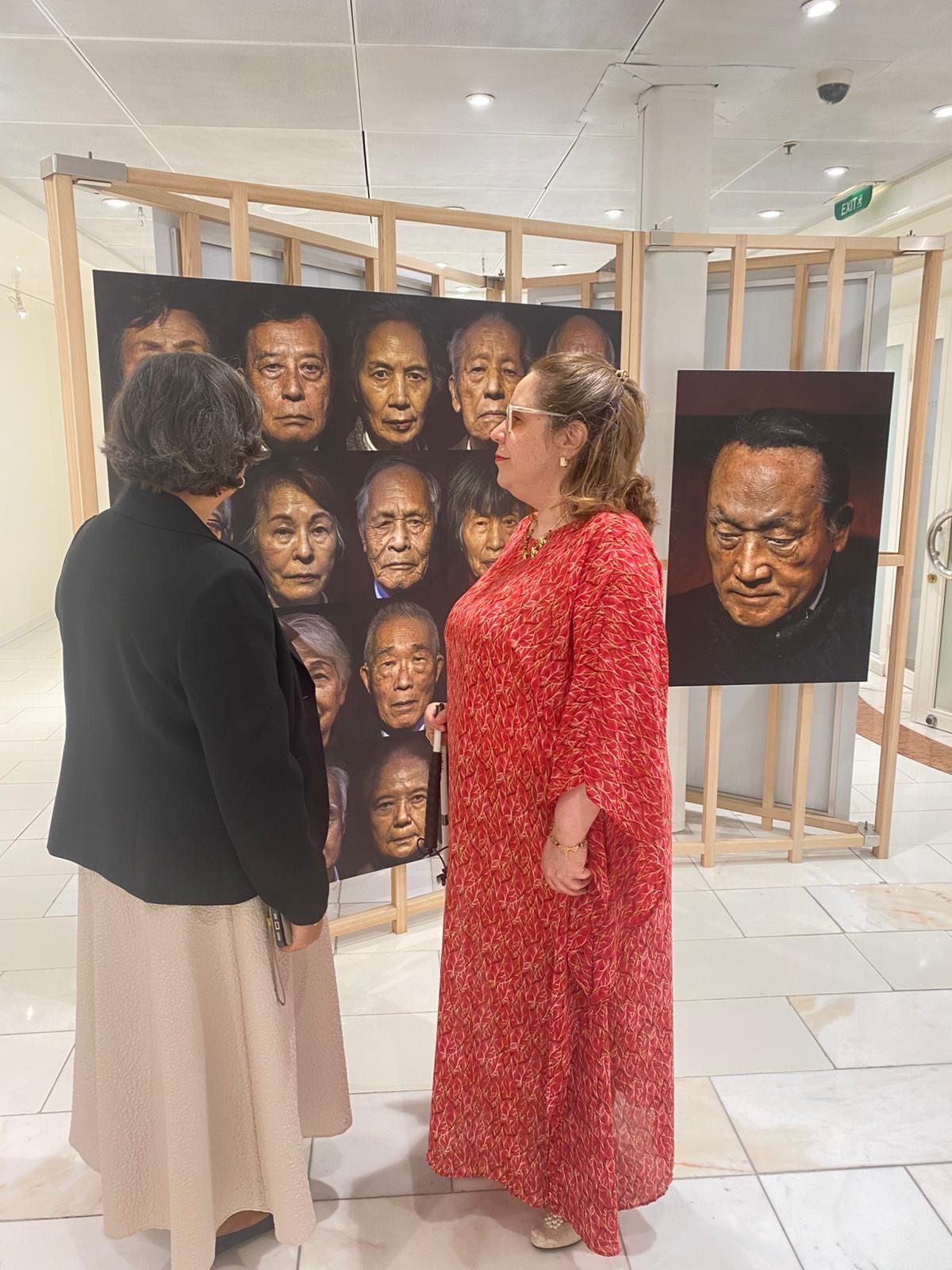
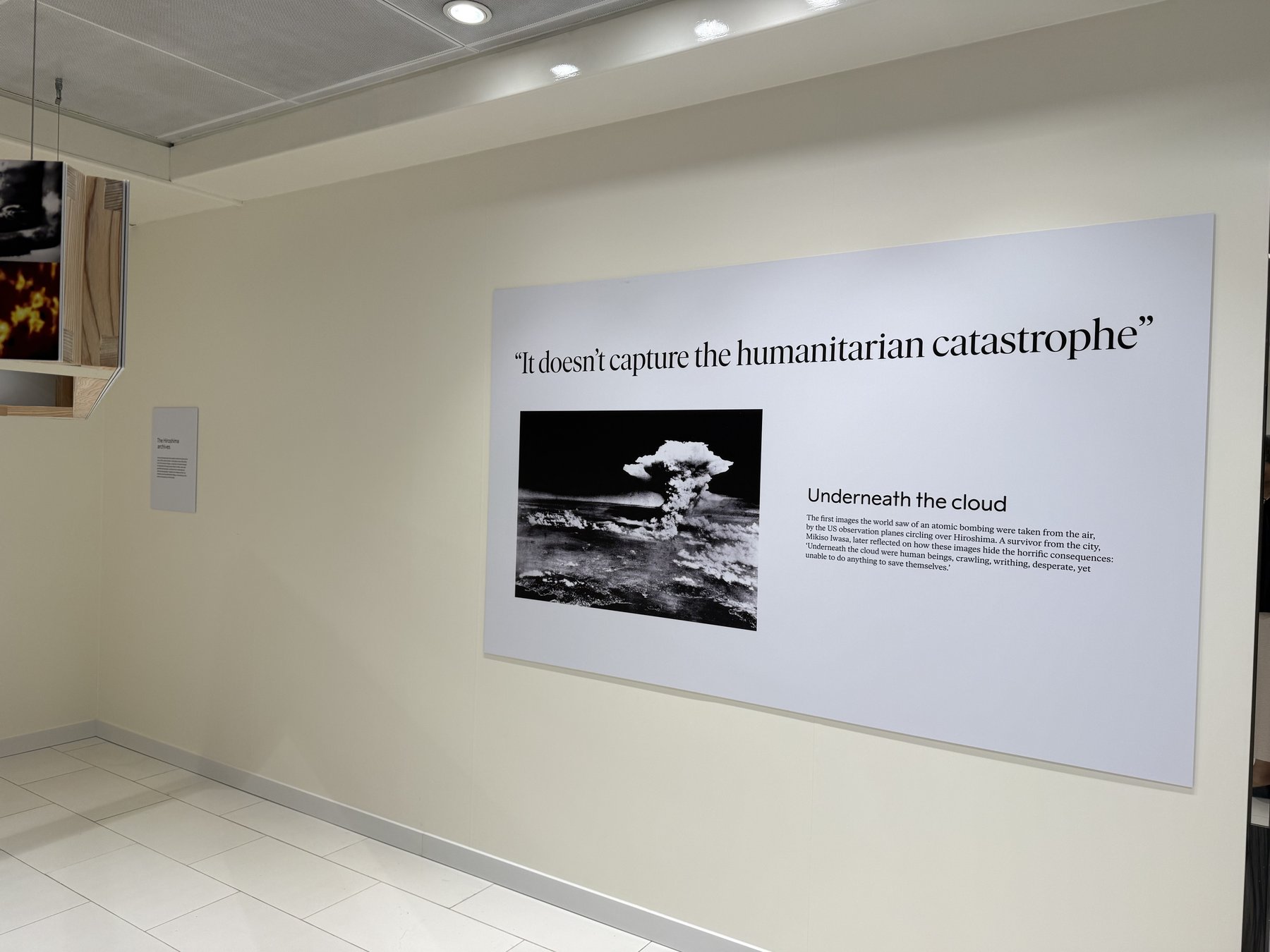
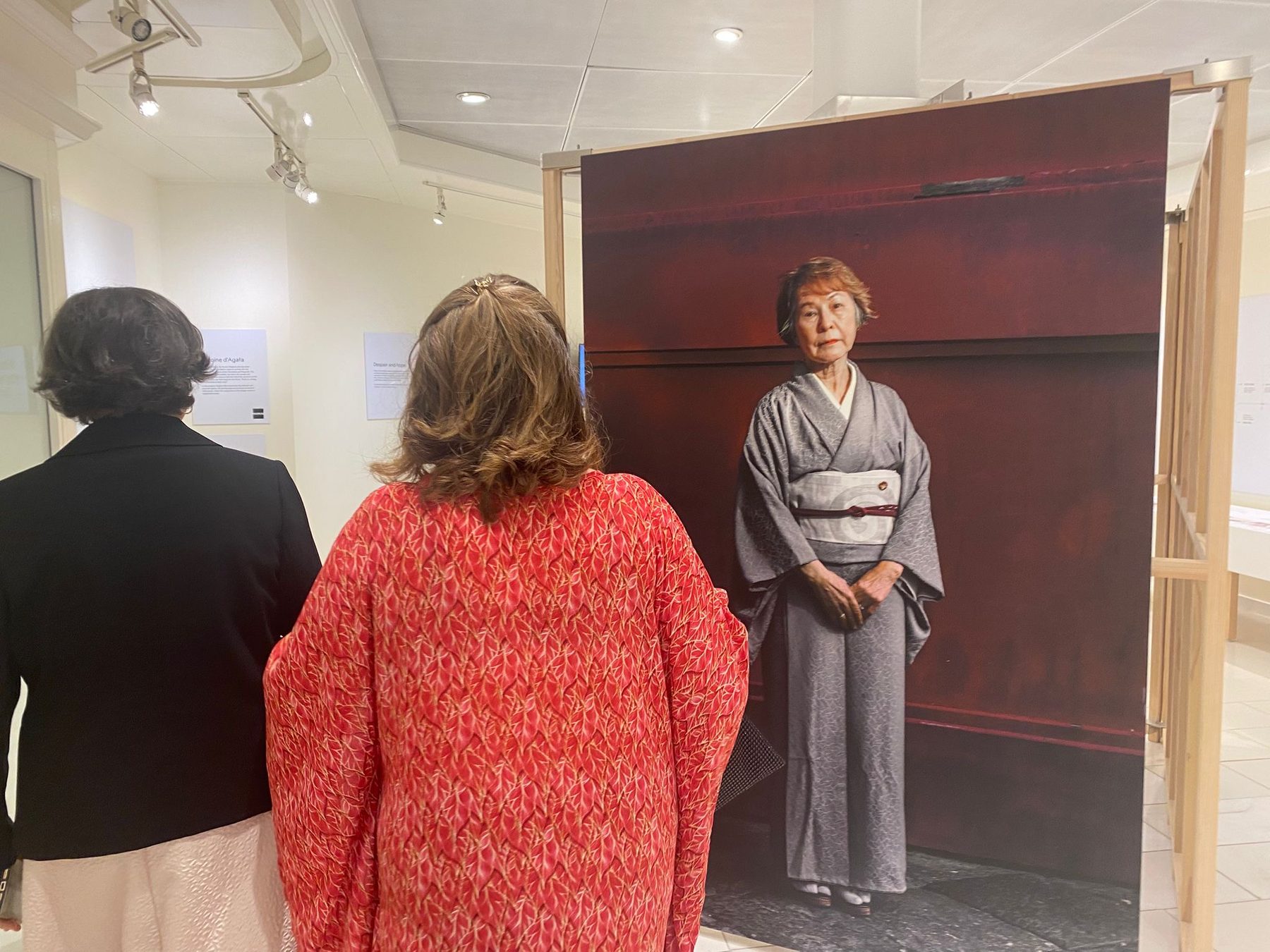
An outreach edition of the Nobel Peace Center's exhibition A Message to Humanity travels permanently aboard the Pacific World, in partnership with Peace Boat. The portraits by Magnum photographer Antoine d'Agata show hibakusha — survivors of Hiroshima and Nagasaki, each face a witness to what must never happen again.
Their organization, Nihon Hidankyo, was awarded the Nobel Peace Prize in 2024. The exhibition reaches communities in 19 countries that might not otherwise encounter it.
Fukushima Tomiko, survivor of the Nagasaki bombing of August 9, 1945, was present at the exhibition's inauguration. She described its journey around the world as a unique opportunity for others to learn. Patricia and Vilma stood before those photographs mid-ocean, between Hong Kong and Singapore.
April 14 · At Sea
Lecture & Workshop
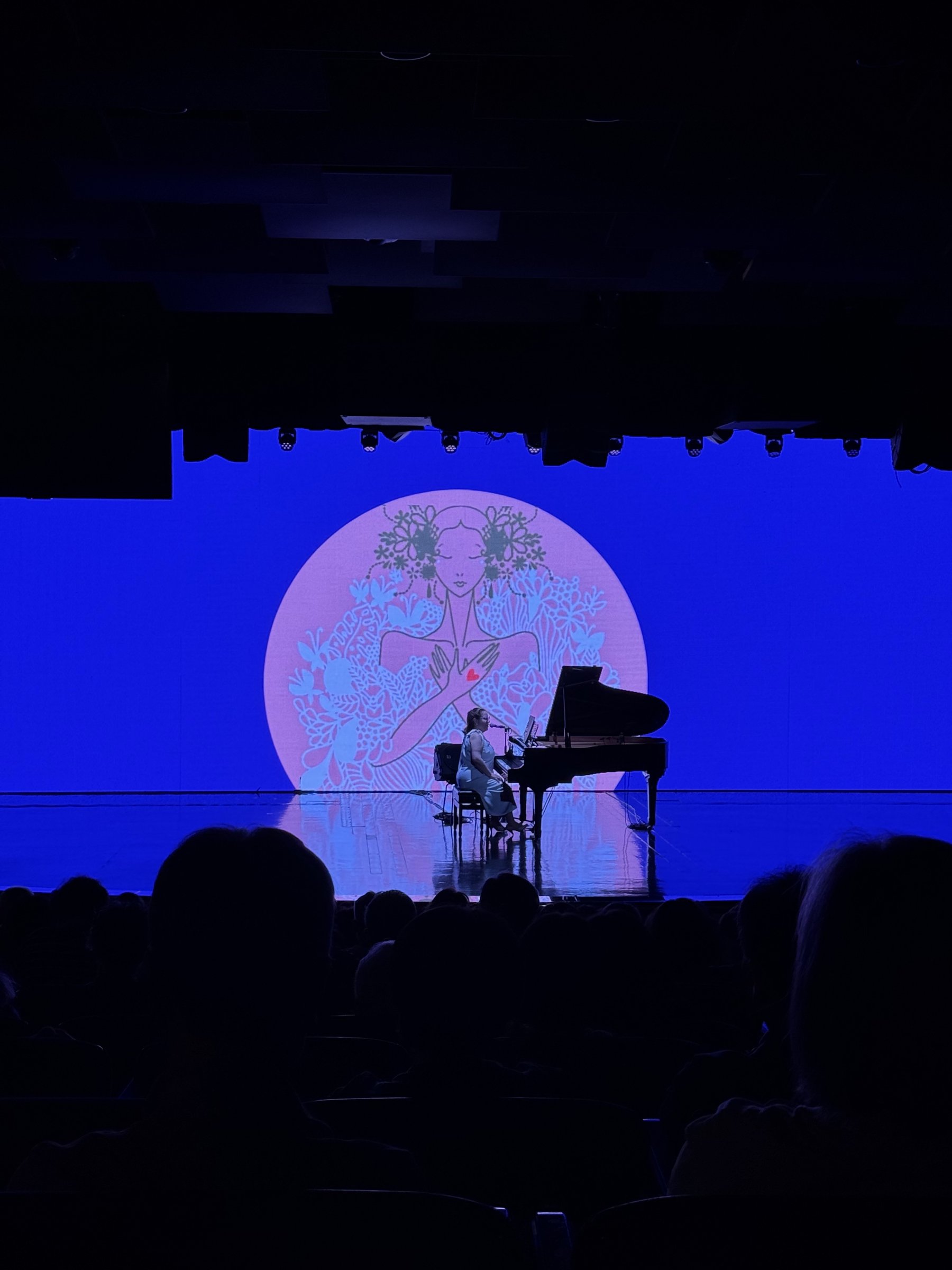
Songs as a Roadmap moved through six countries as personal encounters: Panama, Mexico, Curaçao, Argentina, Brazil and Japan, where Patricia learned the language at nine.
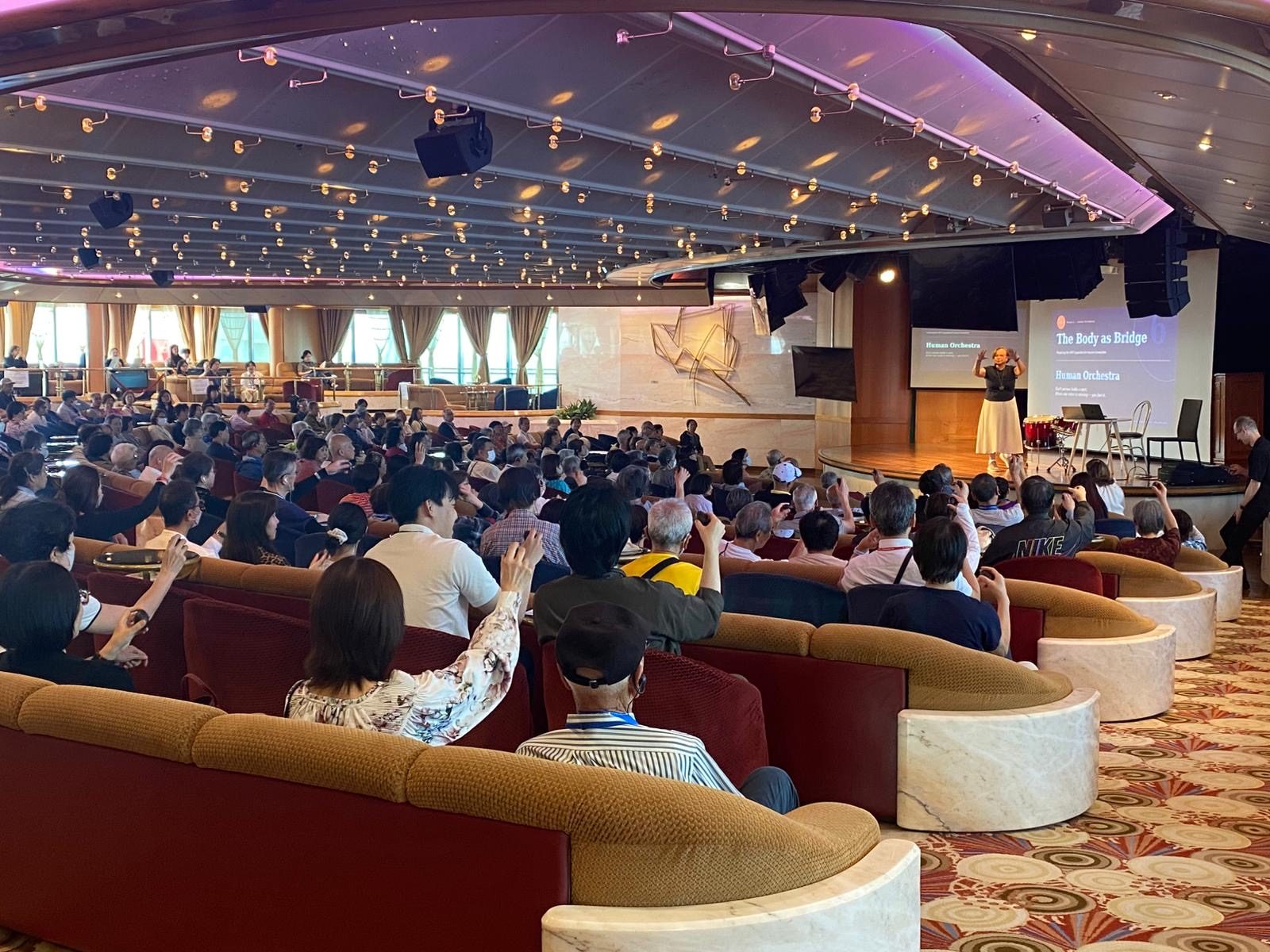
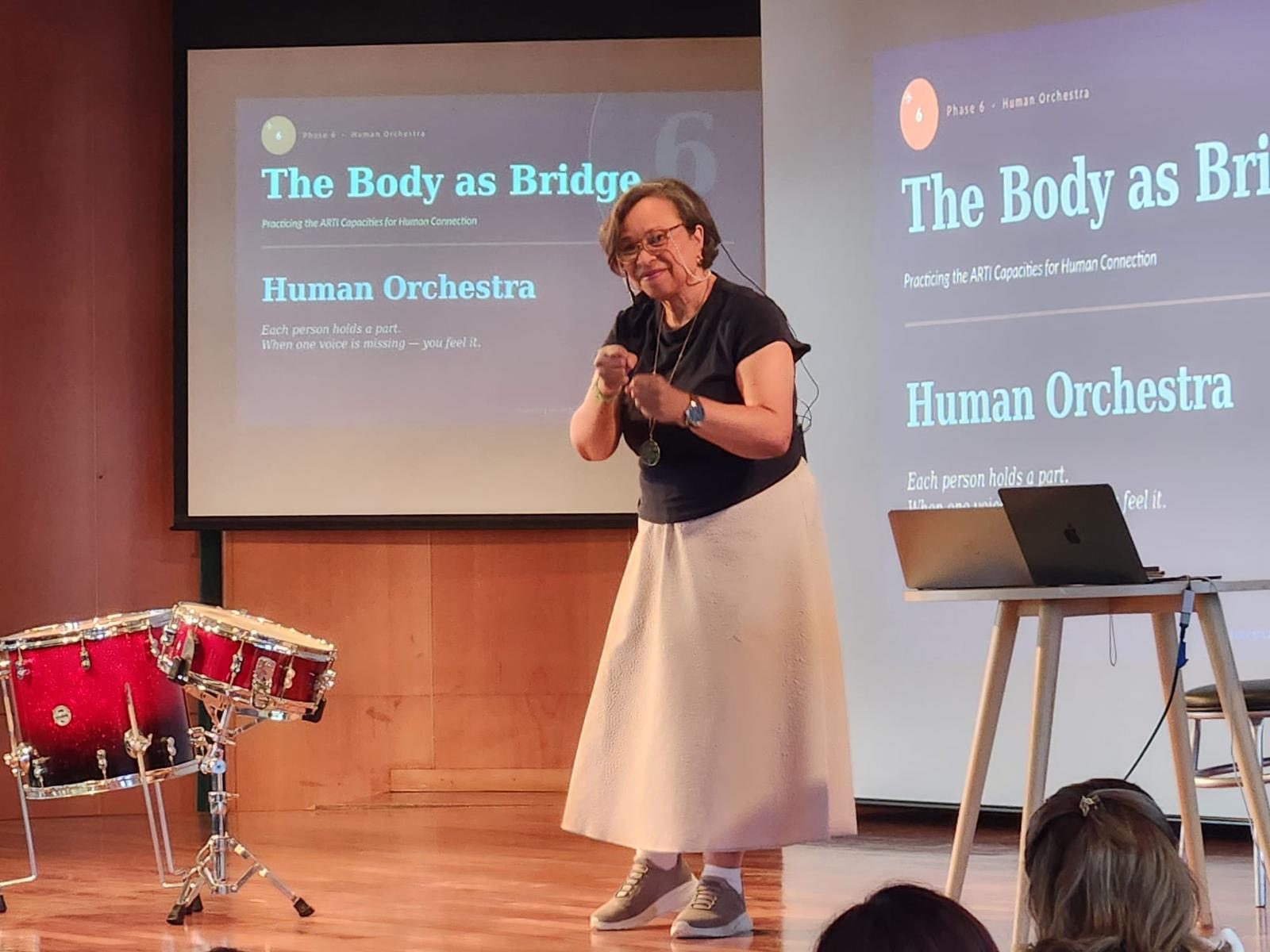
The Body as Bridge, Vilma's embodied workshop, drew on the ARTI framework from her research at Soka University. Participants moved through deep listening, co-regulation and collective rhythm-making.
April 15–16 · At Sea
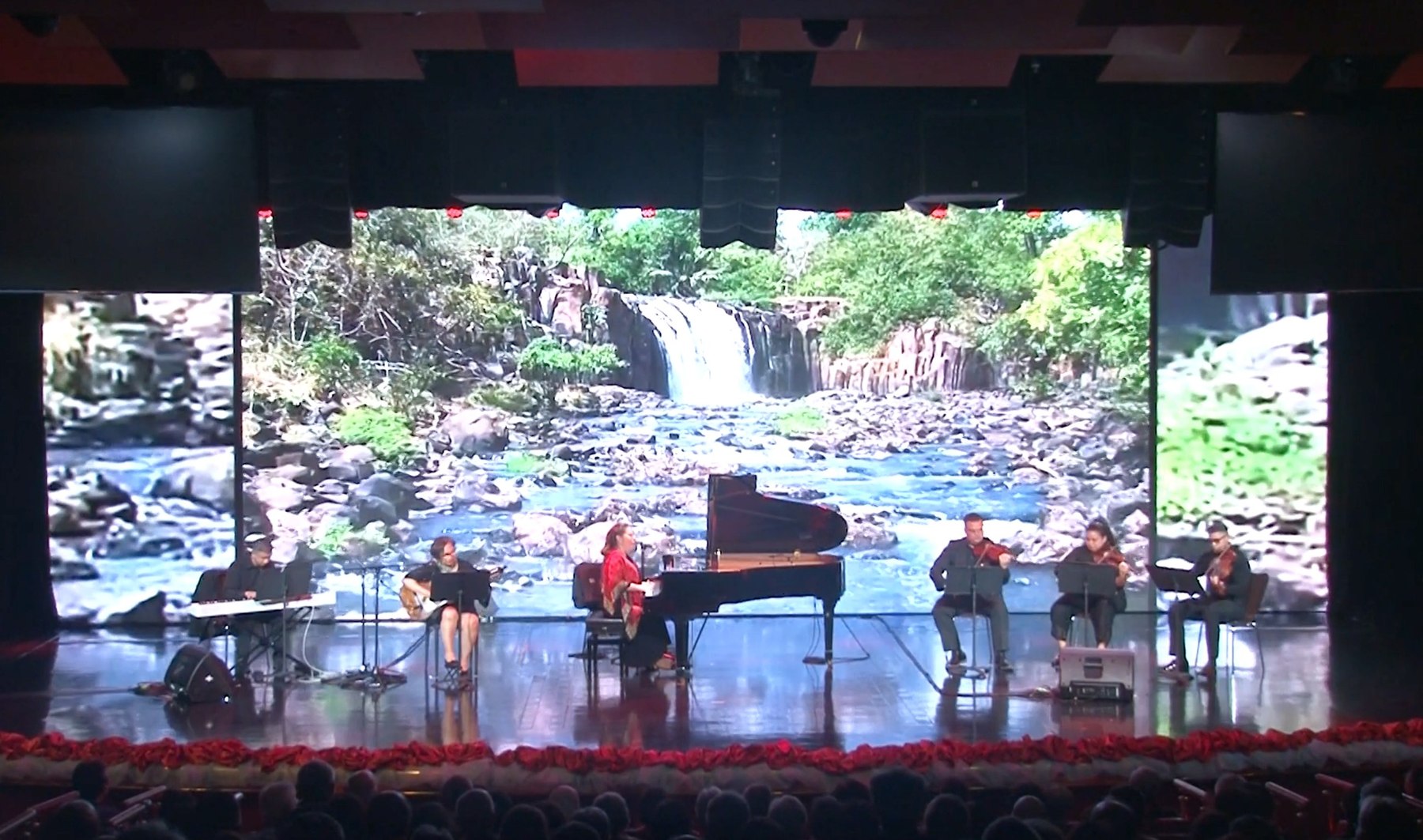
Concert ② — Panamá en el Corazón
Patricia and Vilma were Panamanian artists aboard a ship that would pass through the Panama Canal without them. This concert was their answer: an invitation to visit Panama with the heart.
The program drew from Cabanga, Patricia's portrait of Panama through song. Joined by the Venezuelan string quartet also aboard the voyage, the musicians created an unrepeatable ensemble mid-ocean: Panamanian songs, Venezuelan strings, a Japanese audience and the South China Sea outside the windows.
April 17 · Singapore
End of Residency
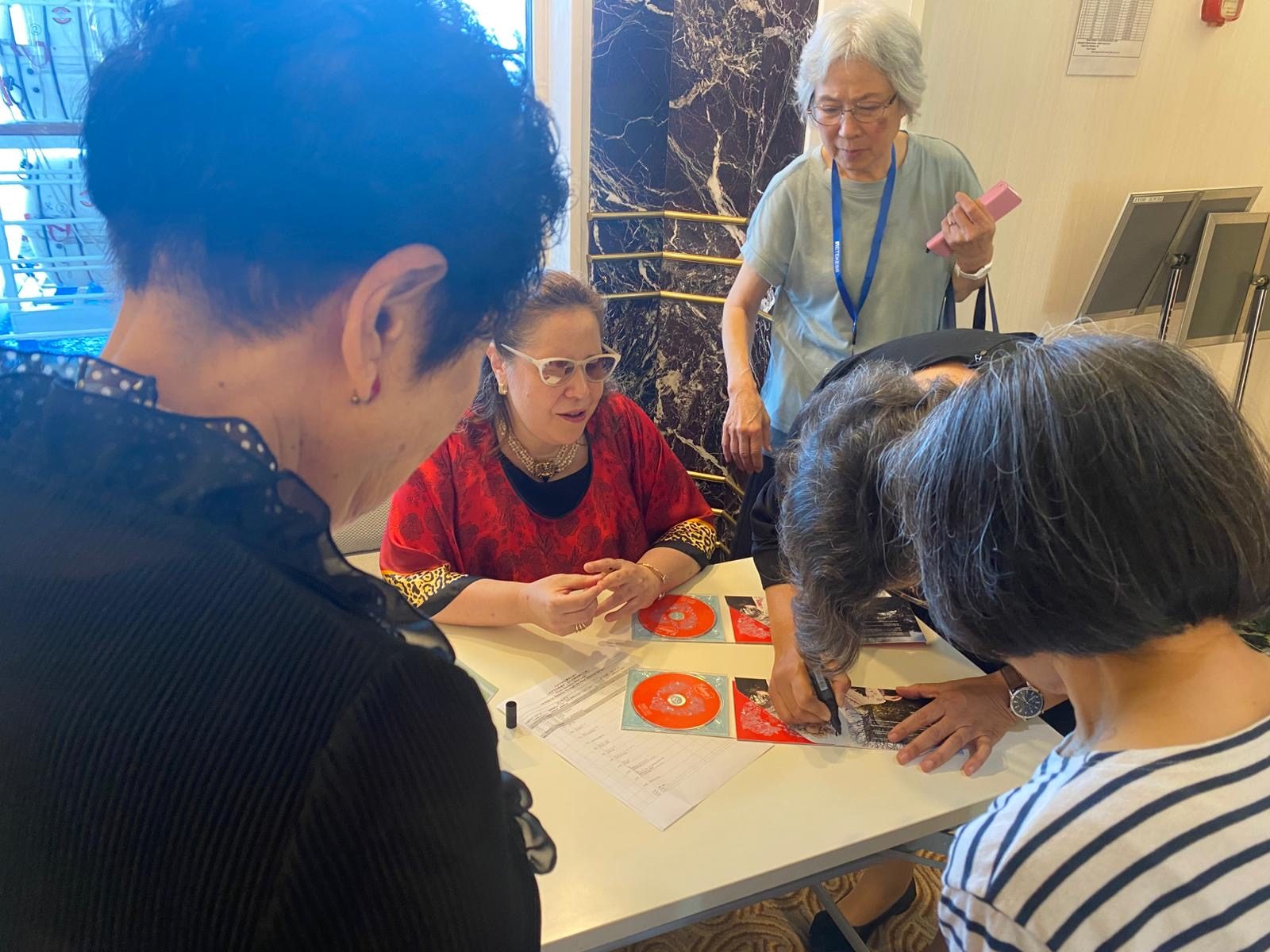
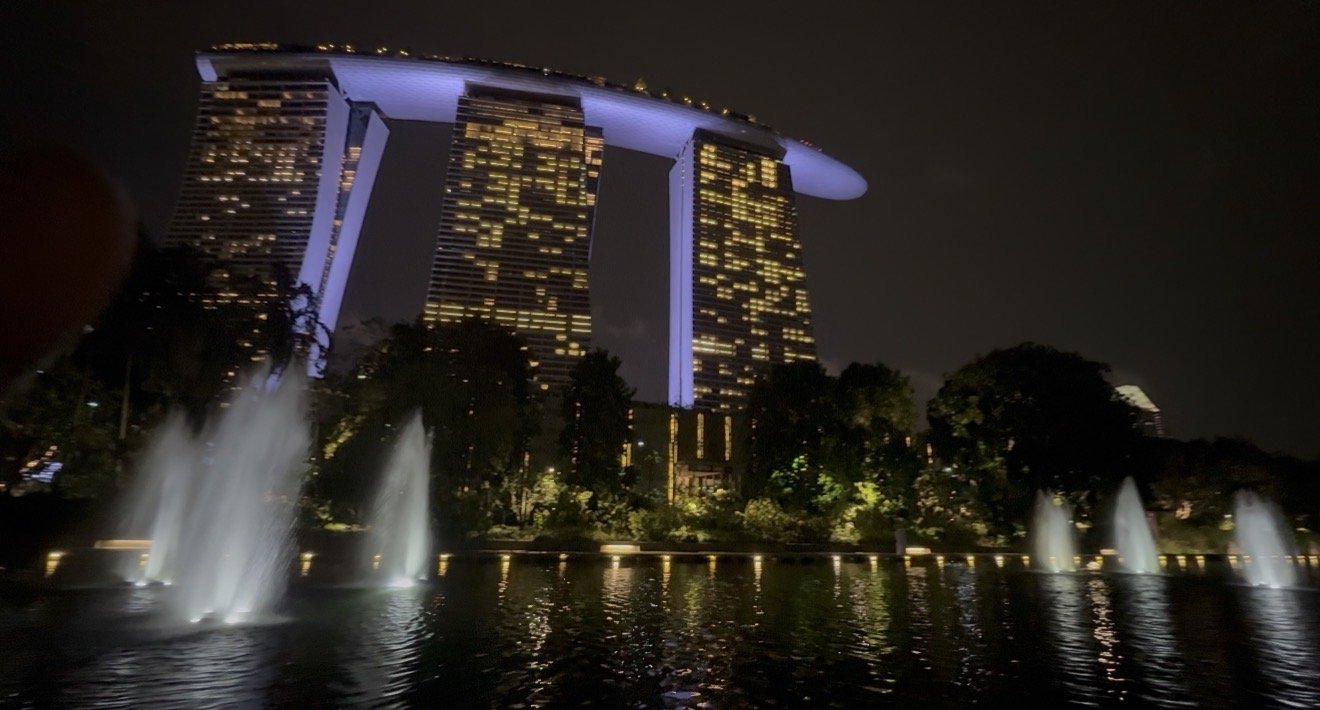
Disembarkation marked the end of Patricia and Vilma's ten days as guest lecturers within the longer Peace Boat voyage.
What Emerged
The voyage made new forms of trust and relationship possible.
“Music became a profound bridge for peace. When songs become encounters, they act as powerful catalysts for empathy and intercultural understanding. Participants left with hearts full of gratitude.”
Peace Boat · Program Statement · Voyage 123
Relationships. A spontaneous collaboration with flamenco artists. An unrepeatable ensemble with a Venezuelan string quartet. A quiet, mid-ocean encounter with the memory of hibakusha survivors.
Ideas. The Body as Bridge showed that deep listening and collective rhythm can move a room of strangers into shared coordination before anyone has spoken.
Invitations. Phase VI of this work is underway, centered on Imabari City, Panama's sister city of fifty years.
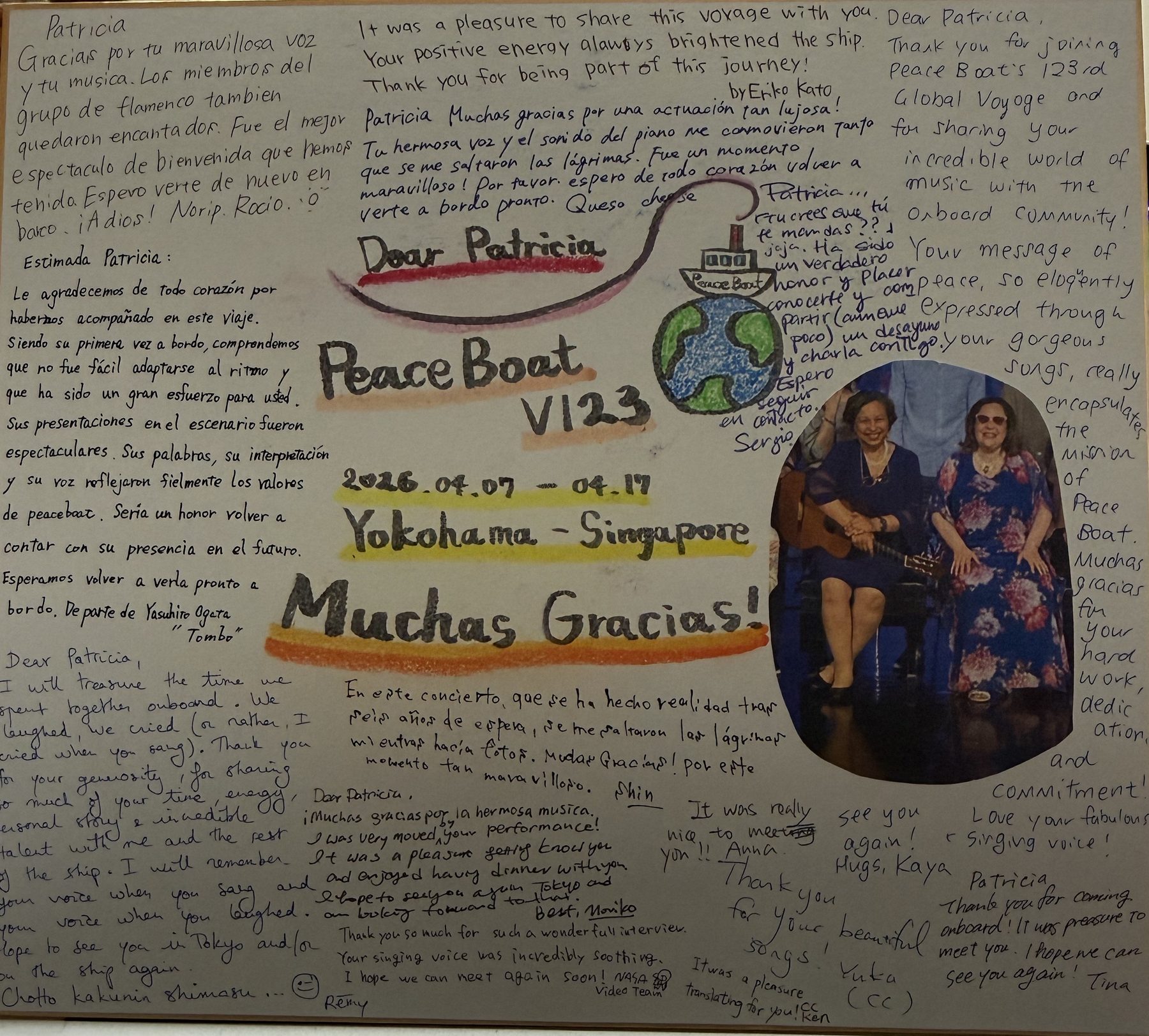
Legacy. Passengers and crew filled two boards with handwritten notes. Shin wrote: “En este concierto que se ha hecho realidad tras años de espera, me saltaron las lágrimas.” Ken, who served as translator, wrote: “We really did make an orchestra together.” Yasuhiro Ogata, known aboard as Tombo, wrote: “Fue un honor ver de cerca la gran relación de confianza que tienen ustedes dos.”
Relational Insight