The original interview was published in Japanese in the Japan-Panama Friendship Association Bulletin, No. 40. The text below is a summary translation prepared by Bridges for Dialogue for international readers.
A relationship that began in fourth grade
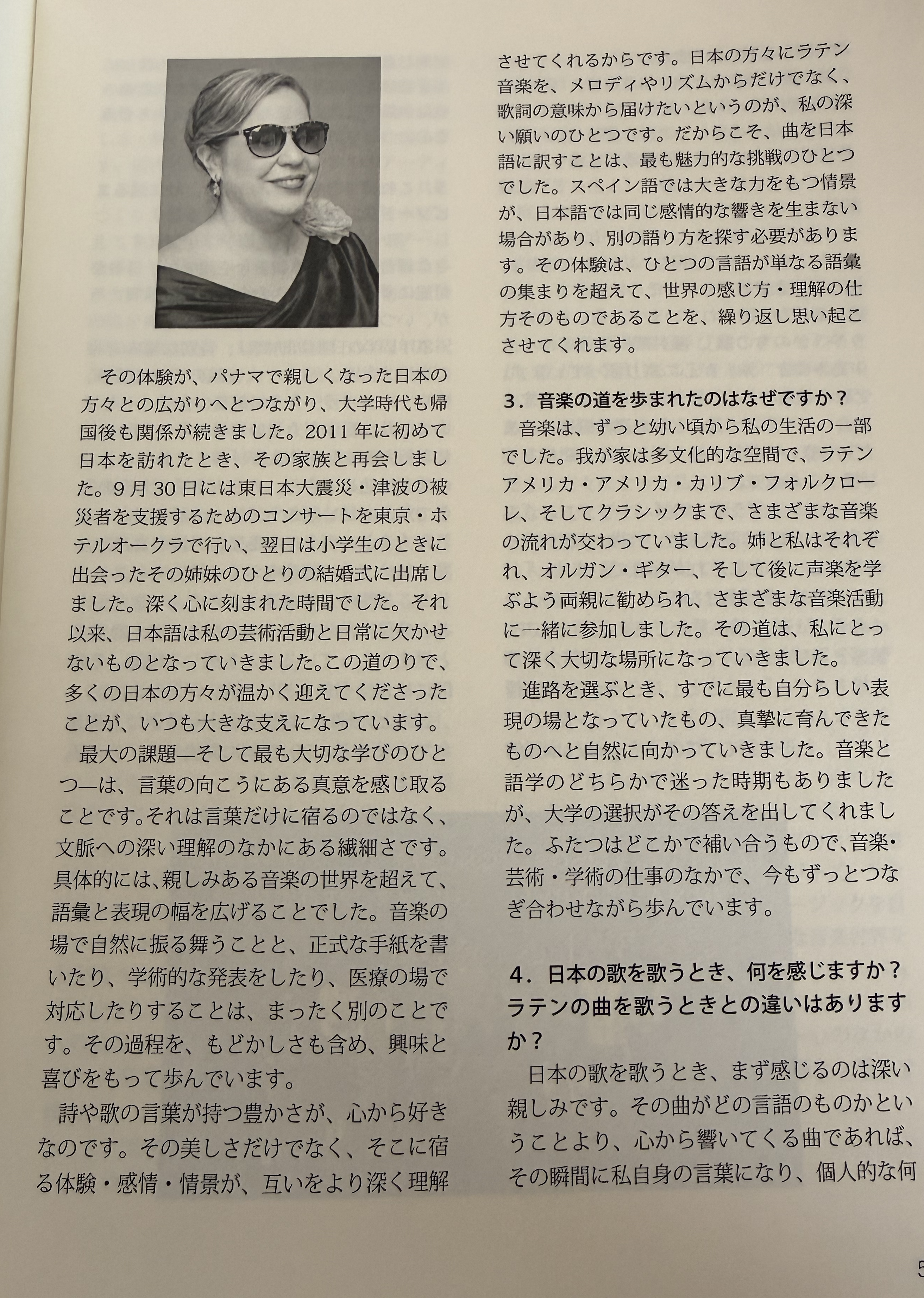
Patricia Vlieg's connection to Japan began in elementary school, when a Japanese family whose father was posted in Panama as a technical advisor became close neighbors and friends. Wanting to remain close to them, Patricia began learning Japanese through weekly telephone calls. That childhood friendship shaped everything that followed.
When she visited Japan for the first time in 2011, she was reunited with the family. On September 30, she performed a charity concert at Hotel Okura in Tokyo in support of victims of the Great East Japan Earthquake and tsunami. The following day she attended the wedding of one of the sisters she had known since childhood. From that point, Japanese became indispensable to both her artistic work and daily life.
“The greatest challenge — and one of the most important learnings — was sensing the true meaning behind words. The subtlety that lives within deep understanding of context.”
Patricia Vlieg · Bulletin No. 40
Cabanga — Panamá en el Corazón in Japan
Cabanga — Panamá en el Corazón was released in a Japanese edition in 2019. The Japan tour carried that repertoire directly into the relationship between the two countries. Supported by the Embassy of Panama and Min-On Concert Association, it included Patricia's performance with the Imabari Children's Choir, singing both Alma Patria and Furusato.
“Hearing the children's voices carry those two songs — each holding within it the feeling of belonging — confirmed for me, both personally and collectively, that intercultural dialogue can be lived from the heart.”
Patricia Vlieg
Patria and Furusato
The interview reflects on the relationship between the Panamanian song Patria and the Japanese song Furusato. Both carry the memory of belonging, family and the place from which one continues to live. The languages differ; the human feeling resonates between them.
“Spanish ‘Patria’ and Japanese ‘Furusato’ share essentially the same meaning — the place of the soul, the origin from which one continues to live. This resonance speaks of something we share as human beings.”
Patricia Vlieg
120 years of Panama–Japan relations
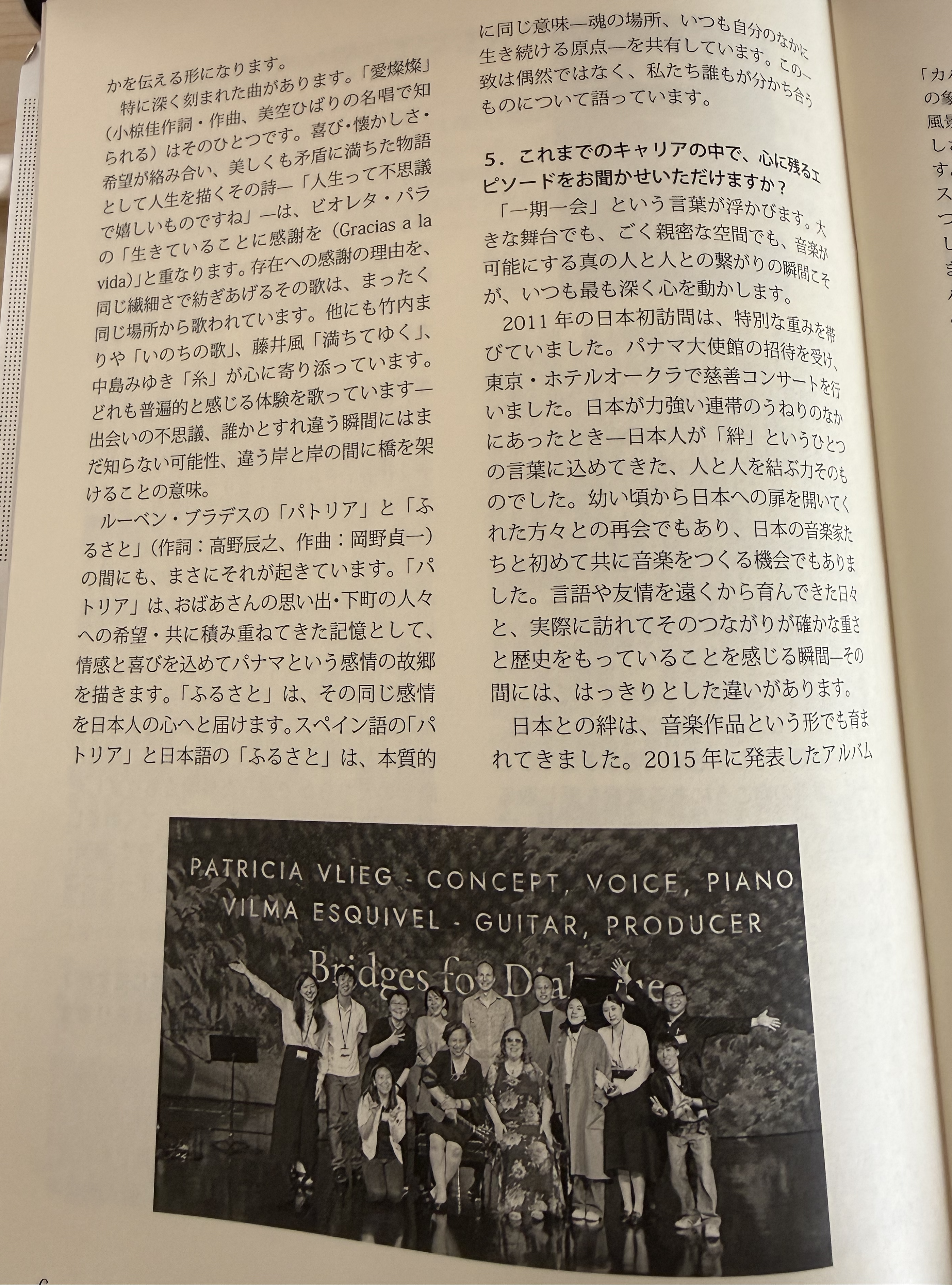
In March 2024, Patricia presented Puentes y Diálogos at Teatro Pacific in Panama City alongside Panamanian and Japanese musicians, marking 120 years of diplomatic relations. The following day, Japan's Ambassador to Panama presented her with a certificate recognizing her contribution to bilateral cultural exchange.
In August, Patricia returned to Tokyo with Vilma Esquivel for two lecture-concerts at the Min-On Music Museum. The two moments became chapters of the same double celebration, experienced first in Panama and then in Japan.
Ichi-go ichi-e
Asked which memory stays with her, Patricia returns to the Japanese idea that every encounter is unique and unrepeatable. Across large stages and intimate rooms, what matters is the genuine human connection music makes possible.
“Ichi-go ichi-e. What moves me most, always, is the genuine connection between people that music makes possible — the bridge between two shores that might otherwise never meet.”
Patricia Vlieg