Years of practice
Our Journey
Bridges for Dialogue is the name we finally gave in 2026 to a practice twenty years in the making. Two women, one shared conviction — that music carries the power to shape how people understand themselves and each other — and a question that still guides us: How can we design the conditions for genuine human encounter to happen and endure?
Chapters
A relationship across places
Guiding question
The Timeline
Seven chapters of a shared practice.
The relationship thread
Panama City→Tokyo→Imabari→Pacific
01 Before 2011 Two Paths, One ConvictionPatricia and Vilma each built a life in music. Their paths met at InHarmony Academy.
Patricia Vlieg grew up in Panama City in a multicultural household where Latin American, Caribbean, folkloric and classical music coexisted. Born without sight, she learned to navigate the world through sound. Her early pull toward jazz, Latin American and world music set the course toward Berklee College of Music in Boston and a career in performance, arrangement and composition.
At nine, a friendship with a Japanese family in Panama introduced her to the Japanese language and opened a relationship with the country's culture that she continued to cultivate for years.
Vilma Esquivel's path began with classical guitar. In Washington, DC, she studied music therapy and continued her musical training at The Catholic University of America. She later founded InHarmony Academy, became the founding president of the Panamanian Music Therapy Association and built an executive career spanning cultural production, corporate communications and work with UN agencies.
When Patricia returned to Panama, she found her way to InHarmony Academy. There, the two recognized what they shared: the conviction that music carried the power to shape how people understood themselves and each other. Patricia had arrived at that truth through the stage; Vilma, through music therapy, cultural production and institutional leadership. That shared conviction became the foundation for everything that followed.
02 2011 Japan, the SeedA diplomatic gala in Tokyo deepened a relationship neither could yet fully name.
In September 2011, Patricia and Vilma traveled to Japan together for the first time — Patricia as invited artist, Vilma as her manager. The occasion was the ILBS Benefit Evening at Hotel Okura, Tokyo, a diplomatic and philanthropic gala organized by the International Ladies Benevolent Society in support of communities in the Tōhoku region affected by the earthquake and tsunami.
Patricia represented Panama as the featured artist. For her, the journey was a return to a culture she had carried since childhood. For Vilma, it was the beginning of a relationship with Japan that would eventually lead her to pursue graduate study at Soka University and inspire her own research.
Neither knew then that the trip would become the seed of the endeavors that followed. Eight years later, Madame Dewi Sukarno invited Patricia to perform at the 22nd Grand Imperial Charity Banquet at Hotel Gajoen, Tokyo, in support of the Japanese Red Cross and international refugee organizations.
03 2015 Cabanga — The Intellectual CoreYears of research into Panamanian song crystallized the idea at the heart of Bridges.
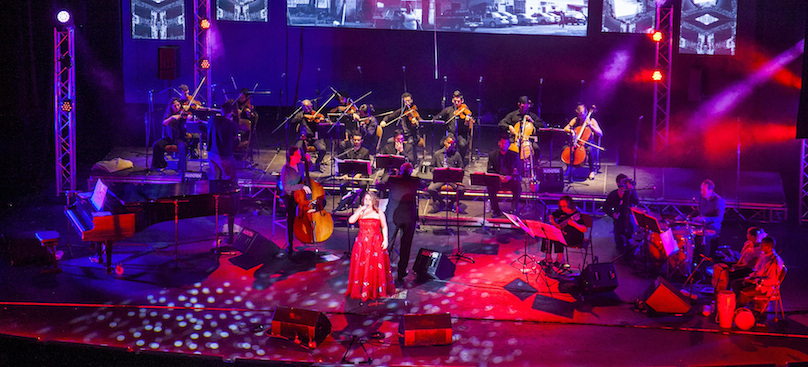
In 2015, Patricia released Cabanga — Panamá en el Corazón, the first in a series dedicated to Panamanian folk and art songs. It was the result of years of research: learning the songs from the inside, understanding the décimas, the saloma and the rhythms of the tambor.
Recorded in Buenos Aires, New York and Panama City with collaborators including Paquito D'Rivera, Lila Downs, Luna Monti, Juan Quintero, Berta Rojas and Mónica Salmaso, the album became the foundation for everything Bridges would later build.
The conviction formed through that process became the intellectual core of the organization.
“One does not know a land deeply if one does not know its songs.”
04 2018–2019 The Practice ExpandsNew commissions and a six-city Japan tour turned a long relationship into sustained practice.
In 2018, Patricia presented Cabanga at Trama, a music industry forum at Ciudad del Saber. In November, Vaishnav Jan To was filmed as a commission from the Government of India for the global commemoration of Gandhi's 150th birth anniversary. An Indian bhajan entered into encounter with Panamanian folkloric tradition, revealing a shared meaning neither culture knew they held.
In 2019, the pace accelerated. Encrumiradas closed the RedPOP congress through an immersive performance that treated science communication as a relational experience. Acordes Naranja put music in the service of ONU Mujeres' campaign against gender-based violence.
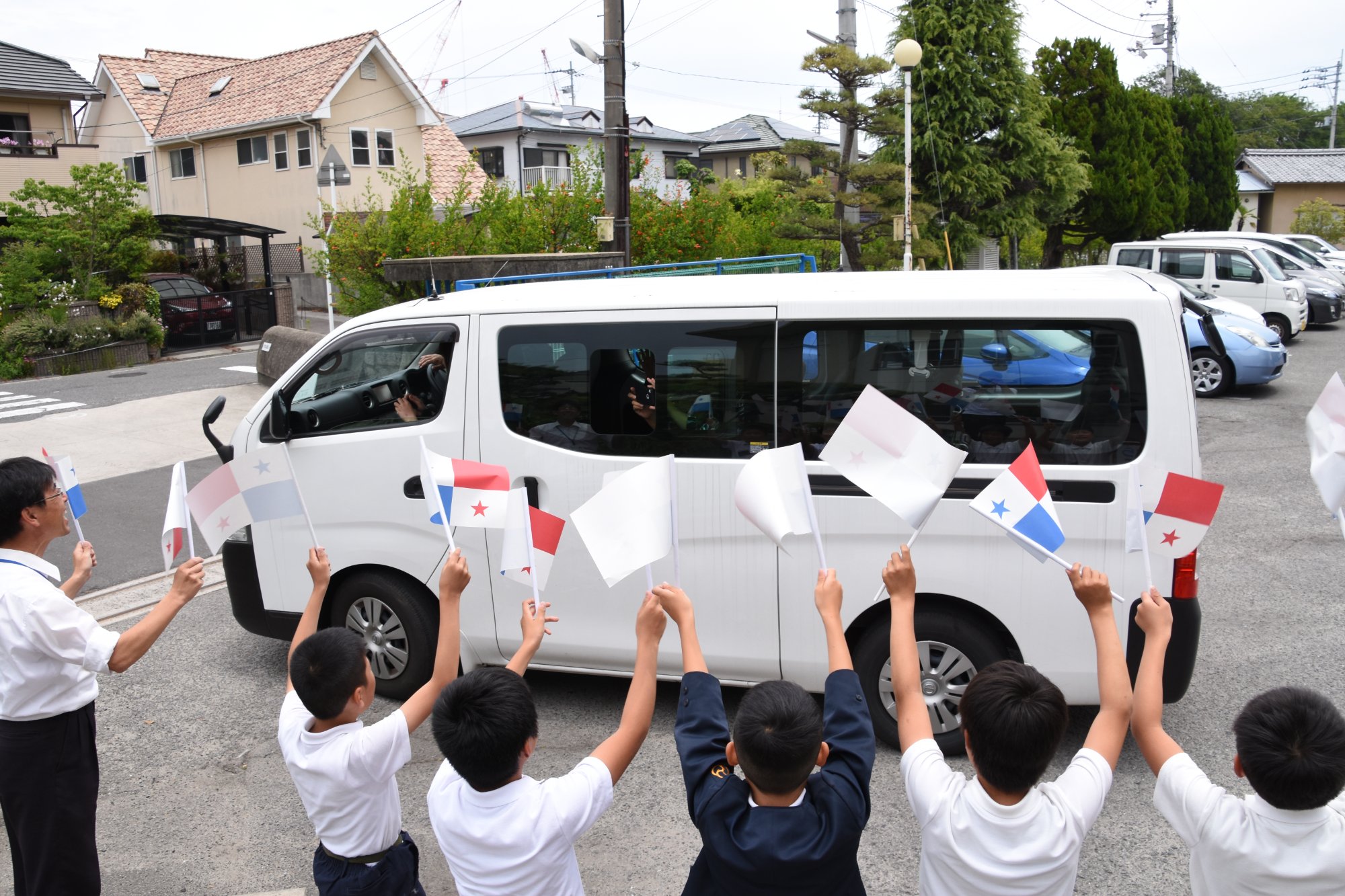
That year, marking the 500th anniversary of the founding of Panama City, Patricia and Vilma traveled through Tokyo, Kobe, Imabari, Gifu, Nagoya and Hamamatsu. In Imabari — Panama City's sister city — children, musicians and civic partners entered the relationship through shared artistic practice.
The childhood connection and the seed planted in 2011 had become a reciprocal professional relationship. Later that year, Patricia and Vilma applied to the MA program in International Relations and Peace Studies at Soka University, Tokyo.
05 2020–2023 Building Bridges When Stages Were EmptyThe pandemic became a laboratory for encounter without physical presence.
When the pandemic put every physical stage out of reach, Patricia and Vilma built a different kind of space. Puentes y Diálogos became a weekly online program of conversations and artistic collaborations transmitted through Radio Cultura in Argentina. Across five seasons, it brought together artists, researchers and cultural practitioners whose distances had previously made connection impossible.
In 2020, Gracias, Tío Simón brought Patricia and Cheo Hurtado together through the music of Simón Díaz. In 2021, Panamá Unidos en Canción gave young Panamanians across nine provinces the platform to research, perform and transmit their own musical heritage, with UNESCO endorsement and a national gala broadcast on SER TV.
In July 2022, Patricia and Vilma produced and performed Panamá nos Inspira for CAF's 25th anniversary in Panama at Teatro Anayansi. In February 2023, Panamá, Huellas y Cantos — Santa Ana marked the 350th anniversary of one of Panama City's oldest neighborhoods through history, architecture, poetry and song. A neighborhood met itself through the voices of the poets who loved it.
Explore Puentes y Diálogos · Explore Panamá Unidos en Canción · Explore Huellas y Cantos
06 2024–2026 Two Theses, One OrganizationThe Soka University years formalized decades of practice, and the work found its name.
Patricia and Vilma enrolled at Soka University in 2024. The pandemic had delayed what their applications in 2019 had set in motion. Their theses developed in parallel, each one formalizing decades of practice into an original intellectual contribution.
Vilma's From Musicking to Mediating developed ARTI: Attunement, Regulation, Temporality and Improvisation, grounded in embodied, affective and temporal dimensions of mediation. Patricia's Sounds of Identity demonstrated how Panamanian folk songs function as instruments of decolonial peacebuilding and pathways toward what she calls re-existence.
In August 2024, the concerts honoring 120 years of Panama–Japan diplomatic relations gave a formal anniversary a shared artistic chapter. Both founders graduated in March 2026, and Bridges for Dialogue was formally established that year. The organization was the name finally given to something that had been building for twenty years.
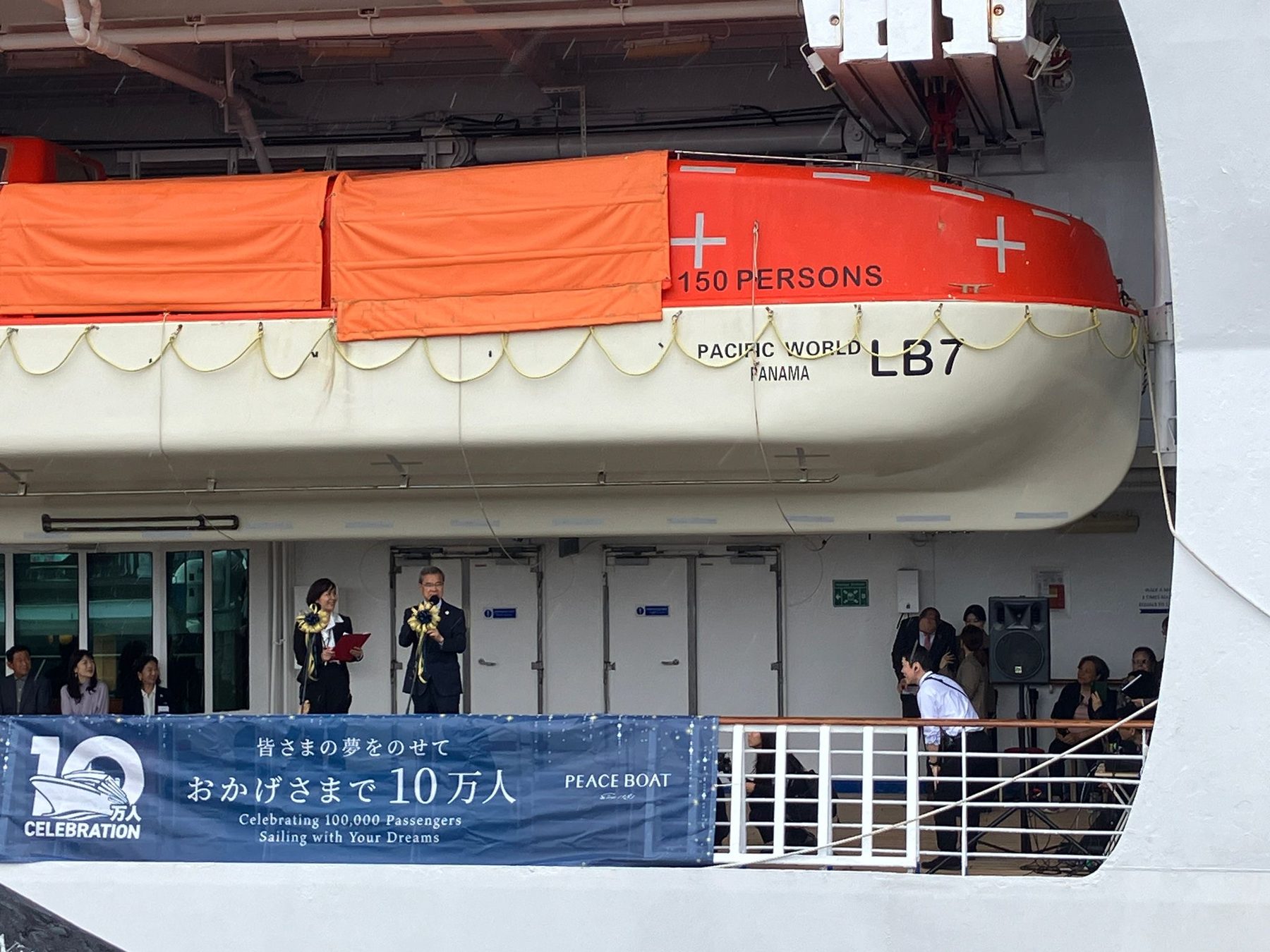
In April, Patricia and Vilma joined Peace Boat Voyage 123 as guest artist and lecturer. In May, Patricia's cinematic recital Cabanga — La Pollera como Memoria e Identidad was presented at the Residence of the Ambassador of Panama in Washington, DC.
Explore the Panama–Japan celebration · Explore Peace Boat · Explore Cabanga in Washington, DC
“The body as bridge; songs as maps; re-existence as practice.”
07 2027 and beyond The Next ChaptersA residency, a collaboration born from a Nagasaki monument and learning rooted in communities.
Sea Bridges 2027 will give the Imabari relationship its first residential chapter — two weeks, a new generation and years of accumulated trust as the foundation.
Semillas de la Paz is heading toward Japan, a collaboration between Patricia Vlieg and Argentine artist Matías Daviron that began with a monument in Nagasaki and thirty years of a relationship generating possibility on its own.
In Santiago de Veraguas and Boquete, community musical groups are the beginning of an educational program that carries the Cabanga philosophy into the provinces: heritage transmitted by the communities that carry it.
The organization is young. The practice is not.
Continue