Case Study
Vaishnav Jan To
How a fifteenth-century Indian hymn, carried through Panamanian musical language, became part of a global tribute to Gandhi.
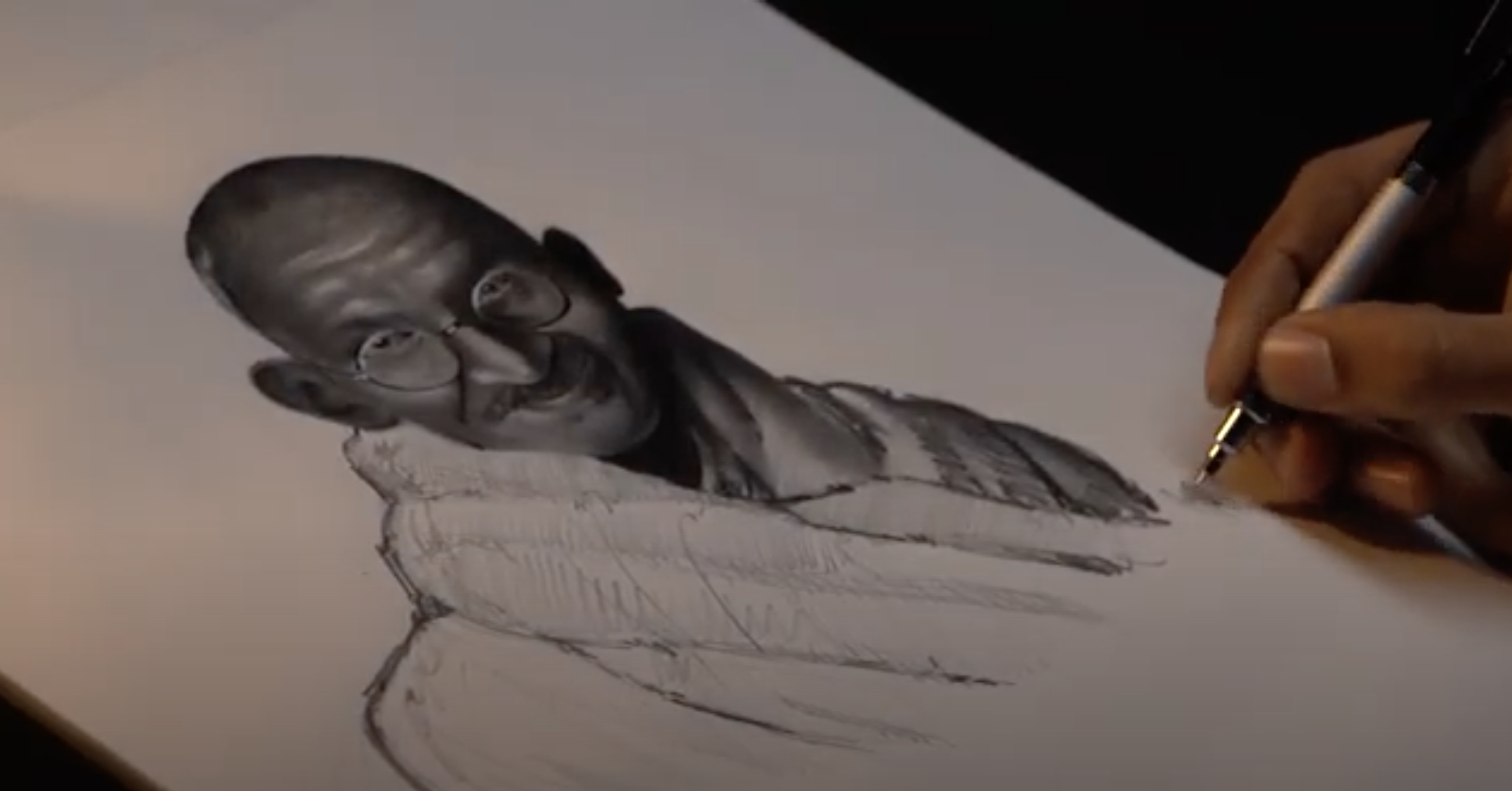
The Relationship
Two traditions meeting through one ethical idea
The relationship at the center of this case is between spiritual traditions: an Indian devotional song and a Panamanian musical language meeting through a shared understanding of compassion.
Vaishnav Jan To describes a person who recognizes another person's suffering, responds without pride and treats all people with dignity. Those values did not need to be imported into the Panamanian interpretation. The artistic task was to recognize where they already lived and allow both traditions to remain present.
The Context
One hymn, interpreted around the world
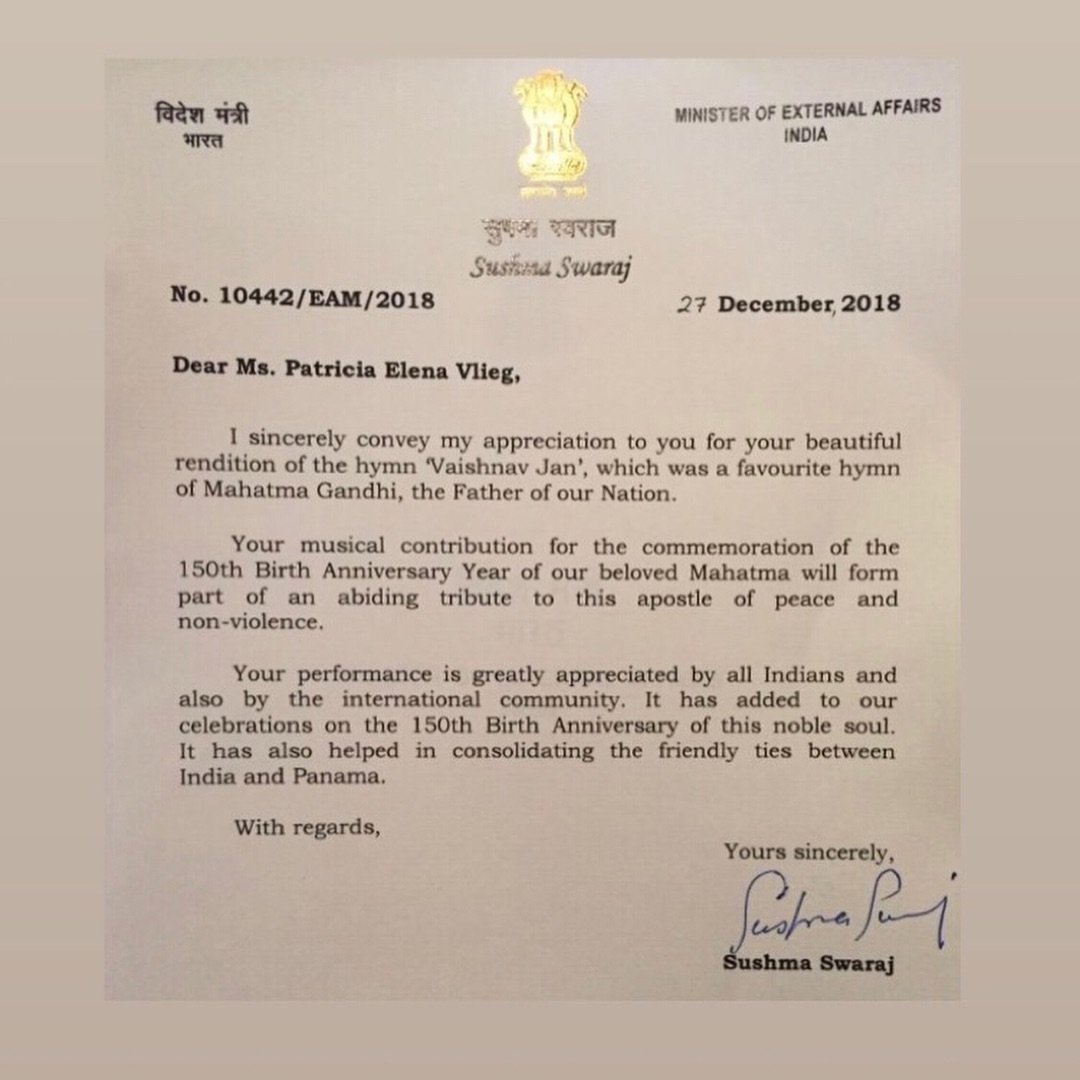
For the 150th birth anniversary of Mahatma Gandhi, India's Ministry of External Affairs invited prominent artists globally to sing Vaishnav Jan To in Gujarati. Artists from approximately 150 countries contributed individual interpretations to a shared international tribute.
The hymn was written by the fifteenth-century Gujarati poet Narsinh Mehta and was among Gandhi's most cherished bhajans. He included it in the prayers that accompanied his daily practice.
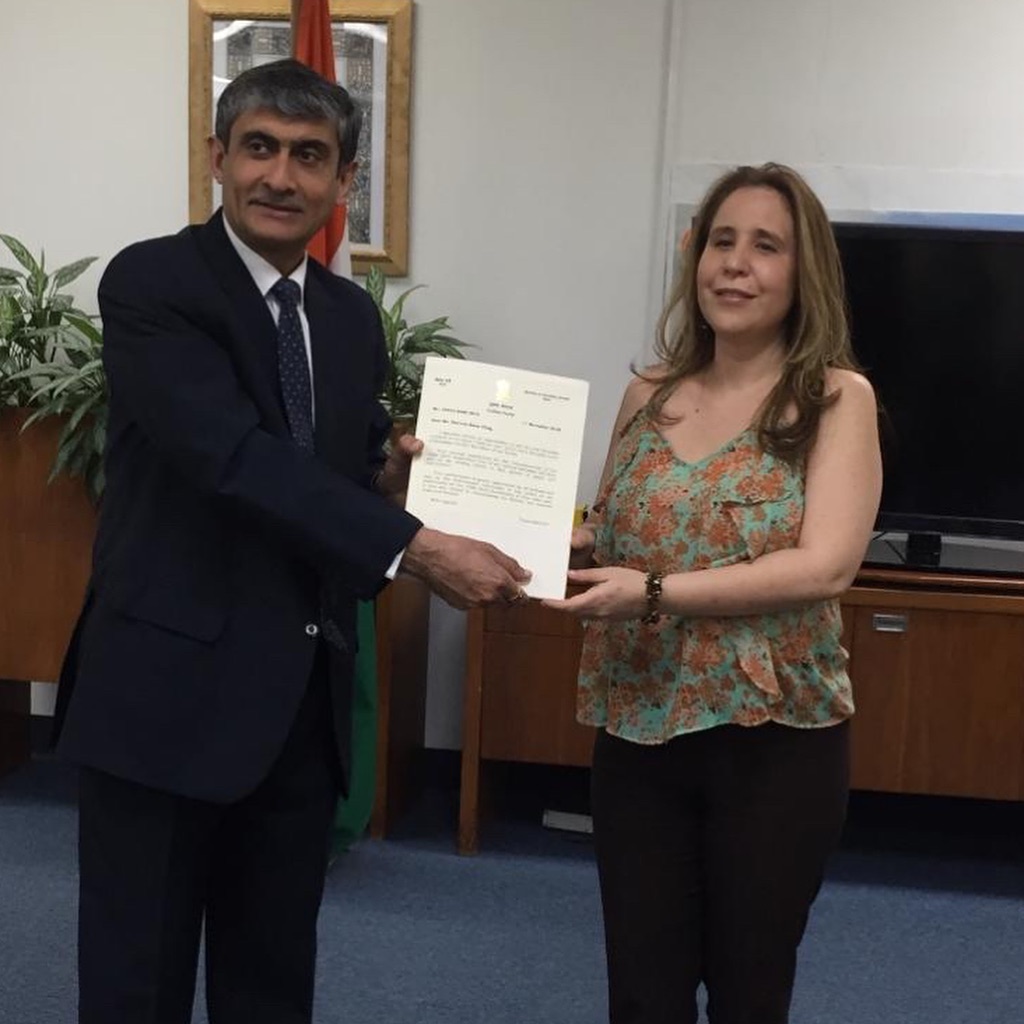
Patricia Vlieg was commissioned to represent Panama. Filmed in November 2018, the work became Bridges' first documented artistic connection with India.
The Opportunity
How can an artist enter another culture's sacred repertoire with integrity?
The commission required more than an accurate performance of unfamiliar words. Patricia needed to understand the ethical world carried by the text, find a vocal relationship with Gujarati and create an arrangement through which Panama could be genuinely present.
The opportunity was to make cultural translation audible: preserving the identity of the bhajan while allowing Panamanian rhythm, voice and sensibility to reveal a shared human meaning.
The Process
Listening before interpretation
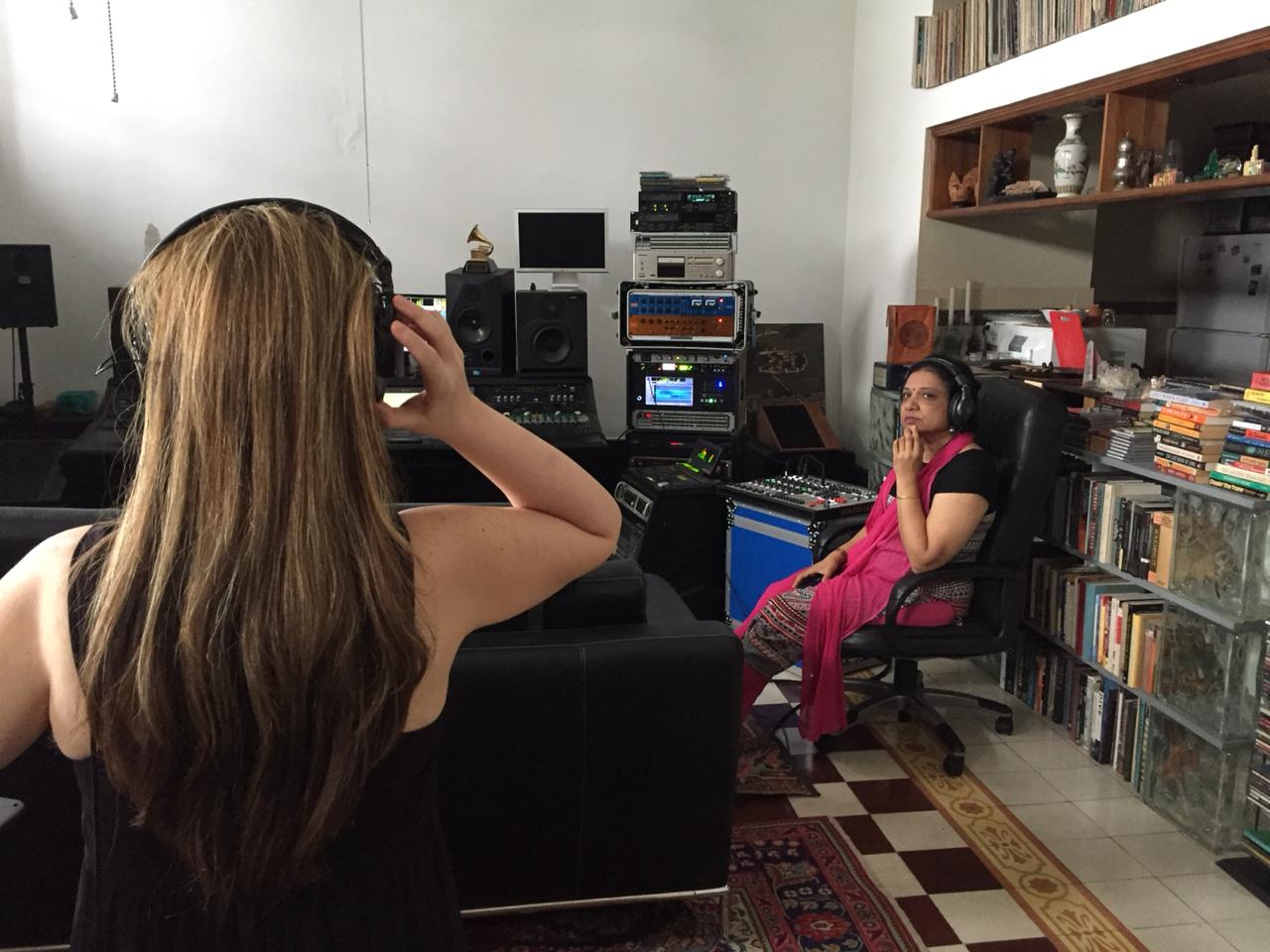
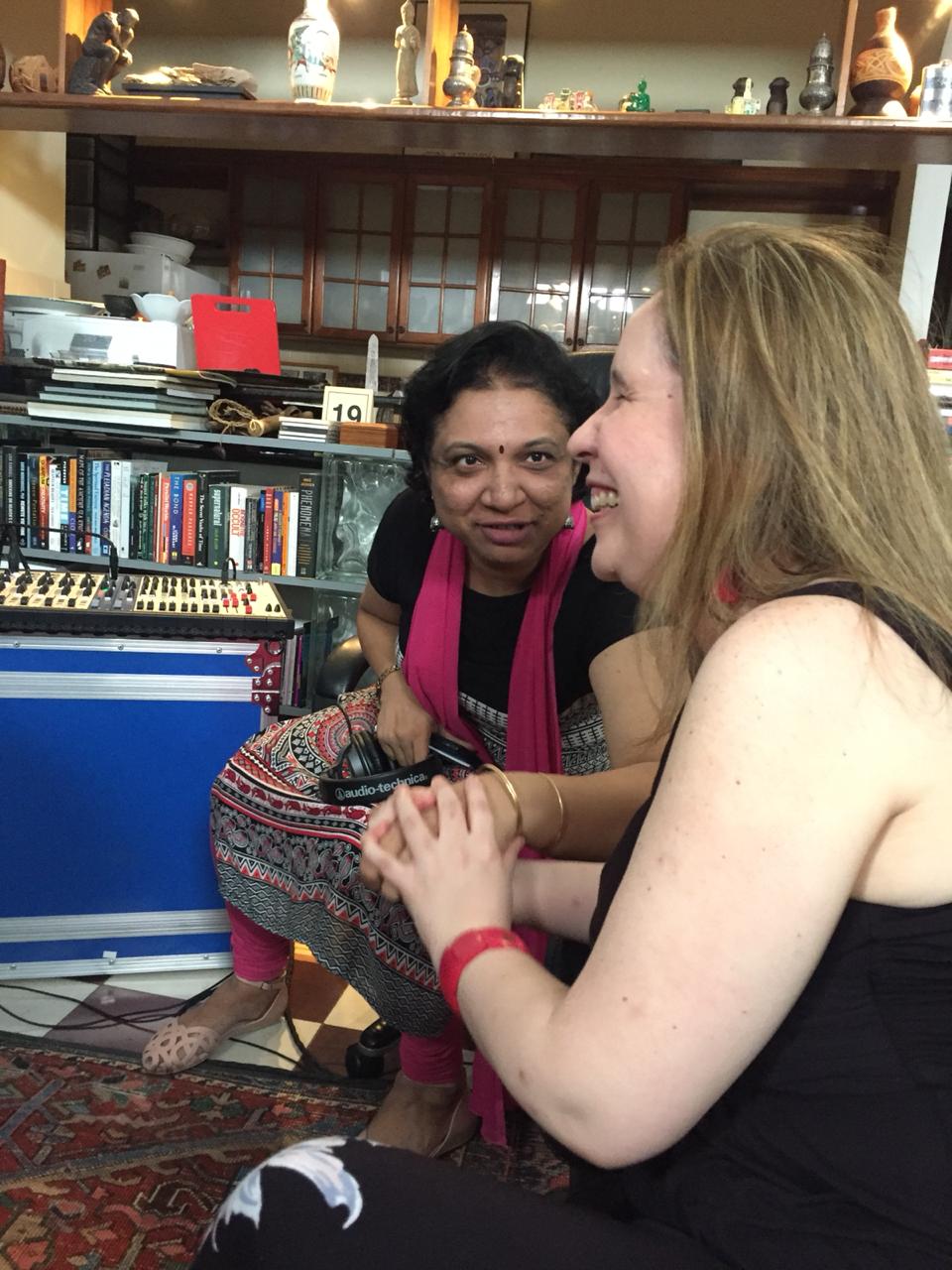
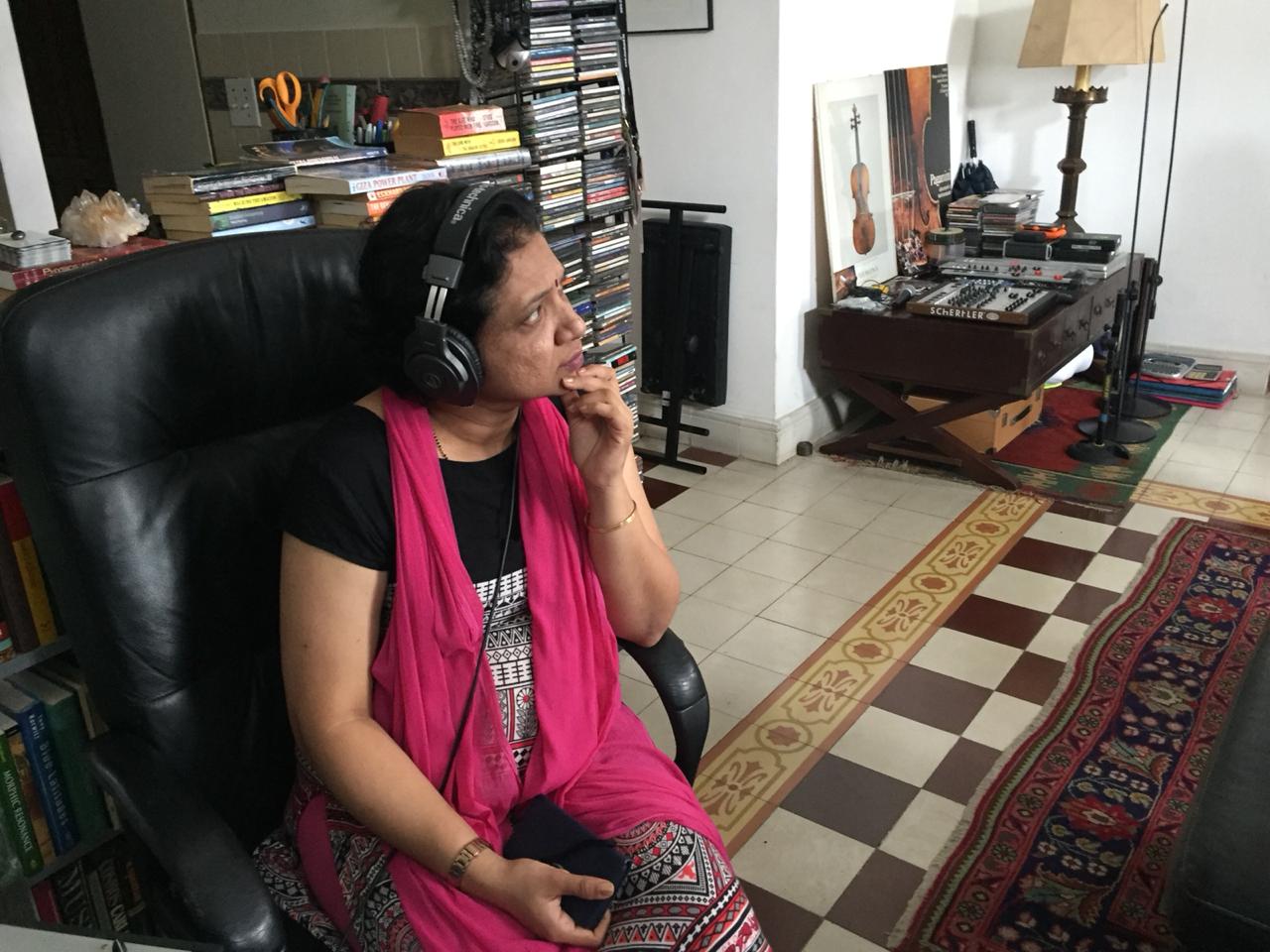
The work began through close listening: to pronunciation, phrasing, meaning and the devotional character of the song. The recording process became a space of exchange in itself, attentive to what musical notation alone could not communicate.
Pronunciation and intention developed together. The aim was for the Gujarati text to feel inhabited, while the Panamanian arrangement grew from the song's meaning instead of being placed around it as decoration.
That process shaped the final audiovisual work: Indian text, Panamanian tambor, Patricia's voice and images made in Panama carrying one continuous interpretation.
Bridges' Contribution
A Panamanian interpretation within a global chorus
Patricia created and performed Panama's contribution to the Government of India's international project. The musical treatment placed Panamanian folkloric rhythm in dialogue with the bhajan while keeping the Gujarati text and its spiritual intention at the center.
The audiovisual production made the cultural relationship visible as well as audible. It presented Panama through its own artistic language while honoring the source tradition with care.
The result belonged simultaneously to three contexts: Gandhi's global commemoration, India's cultural diplomacy and Patricia's continuing practice of learning about people through their songs.
What Emerged
A shared meaning neither tradition had to surrender itself to reach
Relationships. The commission created a direct artistic connection between Panama and India through a work of spiritual and cultural significance.
Ideas. Cultural translation became an act of relationship. The strongest point of connection came through the ethical meaning both traditions could carry — compassion, humility and recognition of another person's pain.
Legacy. Panama's interpretation joined contributions from artists around the world, becoming part of a collective record of Gandhi's message expressed through distinct cultural voices.
Why This Matters
Representation can preserve difference while creating connection.
The project gave Panama room to respond from within its own musical identity. An Indian text and Panamanian tradition could meet while each remained recognizable.
For institutions commissioning intercultural work, that distinction matters. A cultural encounter gains depth when artists are given the responsibility to understand what they are carrying and the freedom to respond from within their own tradition.
Relational Insight
Cultural translation begins with listening.
A tradition can travel across cultures without losing its integrity when the encounter begins with meaning, care and genuine attention.
Read the Government of India record →